Latin America time zone overlap with the US: why it works for US teams
São Paulo, Buenos Aires and Bogotá share 7 to 8 working hours with New York. Here is the city by city math, daylight saving time included.
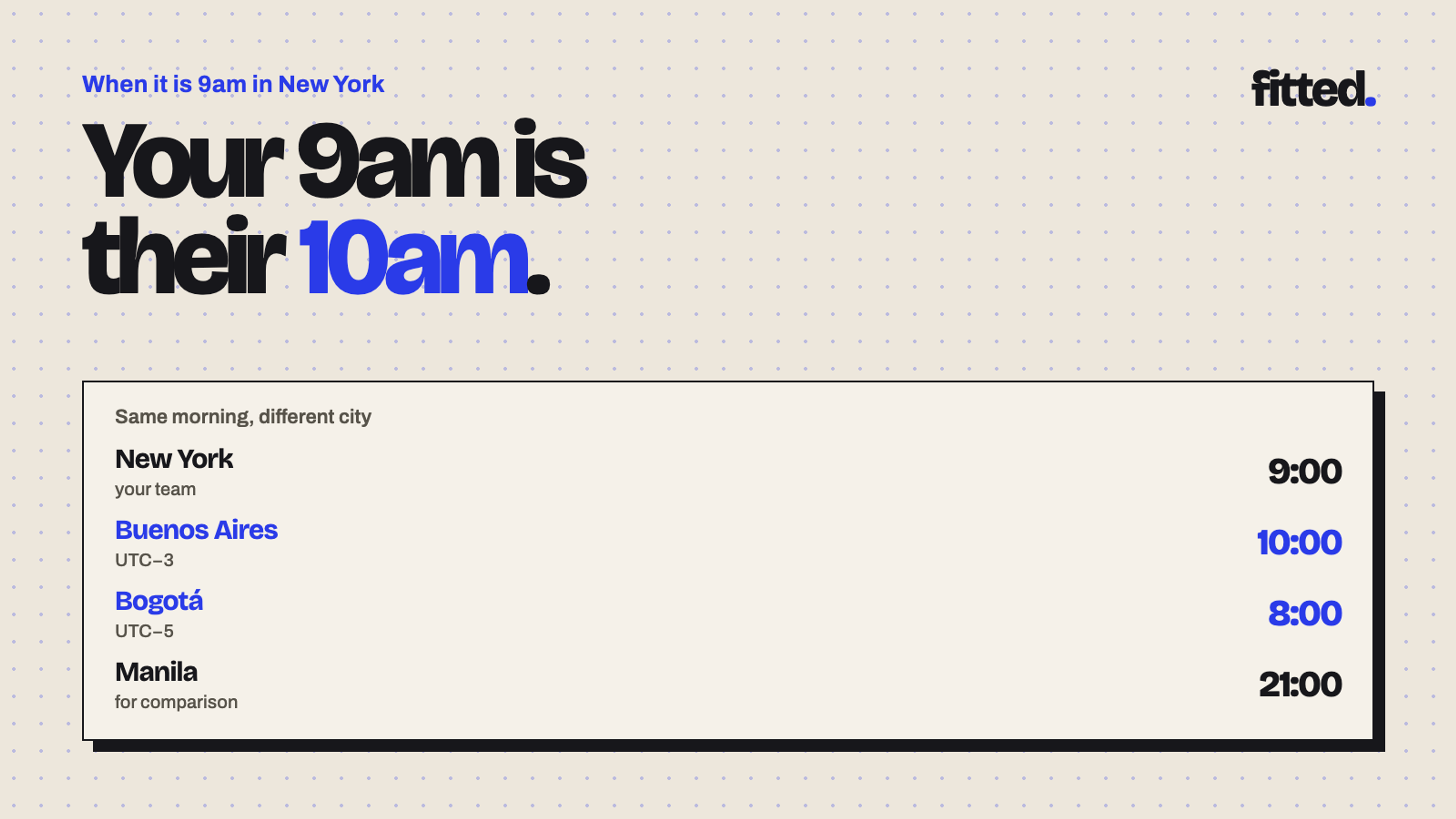
Your standup is at 9am in New York. In Buenos Aires it's 10am. In Manila it's 9pm. That is the whole case for the Latin America time zone overlap with the US: the main hubs sit within two hours of US Eastern time, so a hire in São Paulo, Buenos Aires or Bogotá shares 7 to 8 hours of your working day by our count.
This article shows the math city by city, how daylight saving time shifts it twice a year, and what that overlap means in practice for a paid media team.
What time is it in Latin America when it is 9am in New York?
It depends on the city and the time of year. US Eastern time moves between UTC−4 in summer and UTC−5 in winter, because daylight saving time ends on the first Sunday of November and starts again in March.
The big Latin American hubs mostly do not change their clocks. Brazil abolished daylight saving time in 2019 and stays on UTC−3. Argentina also stays on UTC−3, and Colombia stays on UTC−5.
| When it is 9am in New York | Summer (EDT, March to November) | Winter (EST, November to March) |
|---|---|---|
| São Paulo | 10am | 11am |
| Buenos Aires | 10am | 11am |
| Bogotá | 8am | 9am |
| Manila (for comparison) | 9pm | 10pm |
So the gap is never more than two hours for these three cities. For an offshore hub on the other side of the world, the same meeting falls in the evening or overnight.
How many working hours do LatAm hires share with a US team?
We compare a 9 to 6 local day in each city against a 9 to 5 day in New York. These are fitted. calculations from the offsets above:
| City | Overlap in summer | Overlap in winter |
|---|---|---|
| São Paulo | 8 hours | 7 hours |
| Buenos Aires | 8 hours | 7 hours |
| Bogotá | 7 hours | 8 hours |
Teams on Central time lose about one hour of that overlap. Mountain loses two, and Pacific about three. A Pacific team still gets a solid morning block with someone in Bogotá.
For a nearshore marketing team, this is the difference between a colleague and a vendor. You can ask a question at 2pm and get the answer at 2:15pm.
Why does the Latin America time zone overlap with the US matter for paid media?
Paid media is a same-day job. Budgets pace through the day, a broken tracking pixel burns money by the hour and a creative that stops working needs to be paused, not discussed tomorrow.
When your media buyer works your hours, three things get easier:
- Fixes happen the same day. A spend spike at 11am gets caught before lunch.
- Feedback loops stay short. You review new creatives in the morning and see them live in the afternoon.
- They join the real meetings. Weekly reviews, client calls and planning sessions happen live, not as recordings.
That is also why the salary gap is not the only number that matters when you compare markets. We cover the cost side in what a senior performance marketer costs in the US vs Latin America.
How does daylight saving time change the overlap?
Twice a year the overlap shifts by one hour, in opposite directions for different cities.
When the US moves to winter time in November, New York falls back one hour and São Paulo and Buenos Aires do not. The gap grows from one hour to two, so you lose one hour of overlap with those cities. Bogotá goes the other way: it lines up exactly with New York in winter.
In March the US springs forward and the pattern reverses.
The practical fix is simple. Put recurring meetings in the shared window for both seasons, roughly 10am to 4pm New York time, and they never need to move.
What does a good working rhythm look like across time zones?
In our experience, teams that work well with remote marketers in Latin America keep a simple structure:
- One live touchpoint a day, usually a short standup in the shared morning hours.
- Async updates in writing for performance numbers, so nothing depends on a call.
- A clear owner for after-hours alerts, such as spend caps or automated rules, so nobody is on call by accident.
- Weekly reviews in the overlap window, never at the edges of either day.
None of this is special to Latin America. It is how good remote teams work. The overlap just makes it easy.
What about holidays in the US and Latin America?
Time zones are only half of the calendar. Public holidays differ by country, so a few days a year your hire will be off when your team is working, and the other way around.
Brazil, Argentina and Colombia each have their own national holidays, and some fall close to US ones while others do not. Carnival in Brazil, for example, can take a few days out of February or March.
The simple fix is to agree on it during onboarding. Share both holiday calendars at the start of the year, decide which local holidays the person takes and mark them in the shared calendar. For a paid media role, also agree who watches spend on days when one side is off.
It is a small planning step, and it removes the only real surprise in an otherwise easy overlap.
Is the Latin America time zone overlap better than Eastern Europe or Asia?
For a US team, yes, on hours alone. Eastern Europe sits six to seven hours ahead of New York, so the overlap is a few morning hours at best. Most of Southeast Asia is eleven to thirteen hours ahead, so there is almost none.
That does not make other regions a bad choice. It means the working model has to be different: more async, more handoffs and slower feedback. If you want someone in your daily meetings, Latin America is the region that fits your clock.
How do we check working hours before you meet a candidate?
Hours are one of the five points on every fitted. scorecard. Before a candidate reaches your shortlist, we confirm the hours they will work, their city and their availability for your recurring meetings.
You will not find out in week two that your new hire cannot join the Monday review.
FAQ
How many hours of overlap do Latin America hires have with New York?
By our count, 7 to 8 hours for São Paulo, Buenos Aires and Bogotá, comparing a 9 to 6 local day with a 9 to 5 day on US Eastern time.
Does Brazil use daylight saving time?
No. Brazil abolished daylight saving time in 2019 and stays on UTC−3 all year, so the gap with New York changes only when the US changes its clocks.
Which Latin American city is closest to US Eastern time?
Bogotá. Colombia is on UTC−5 all year, the same as New York in winter and one hour behind it in summer.
Can a Latin America hire work with a US West Coast team?
Yes. A Pacific team keeps a morning block of shared hours, longest with Bogotá. Schedule live meetings early in the Pacific day.
Isadora Teodoro. Psychologist and recruiter with in-house and freelance HR experience. Runs talent mapping, screening and behavioral assessments at fitted. Published .
Related posts
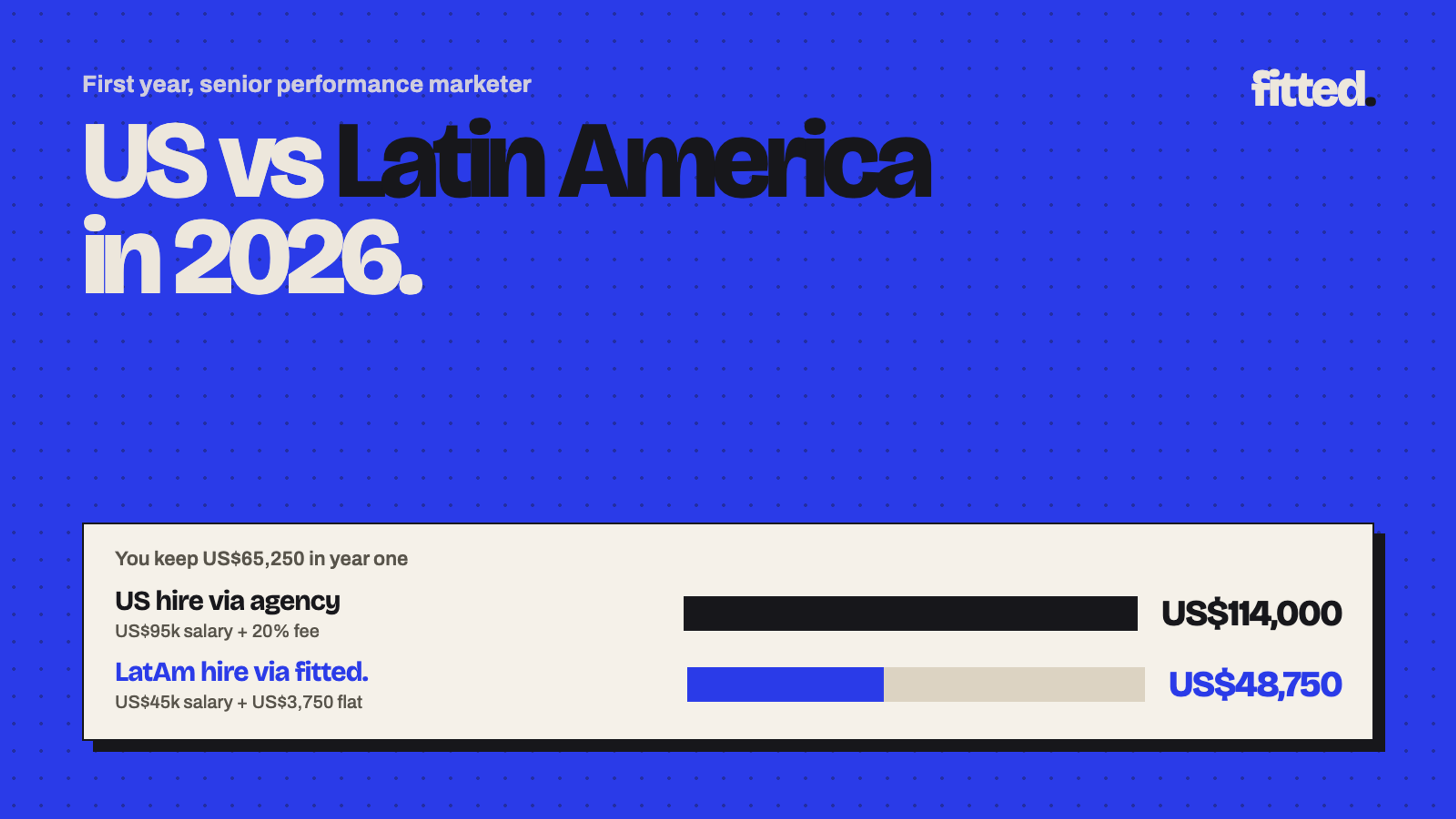
What is the cost to hire a performance marketer in the US vs Latin America in 2026?
A senior performance marketer costs US$85k to 110k a year in the US and about half in Latin America. Here is the first-year math, fees included.
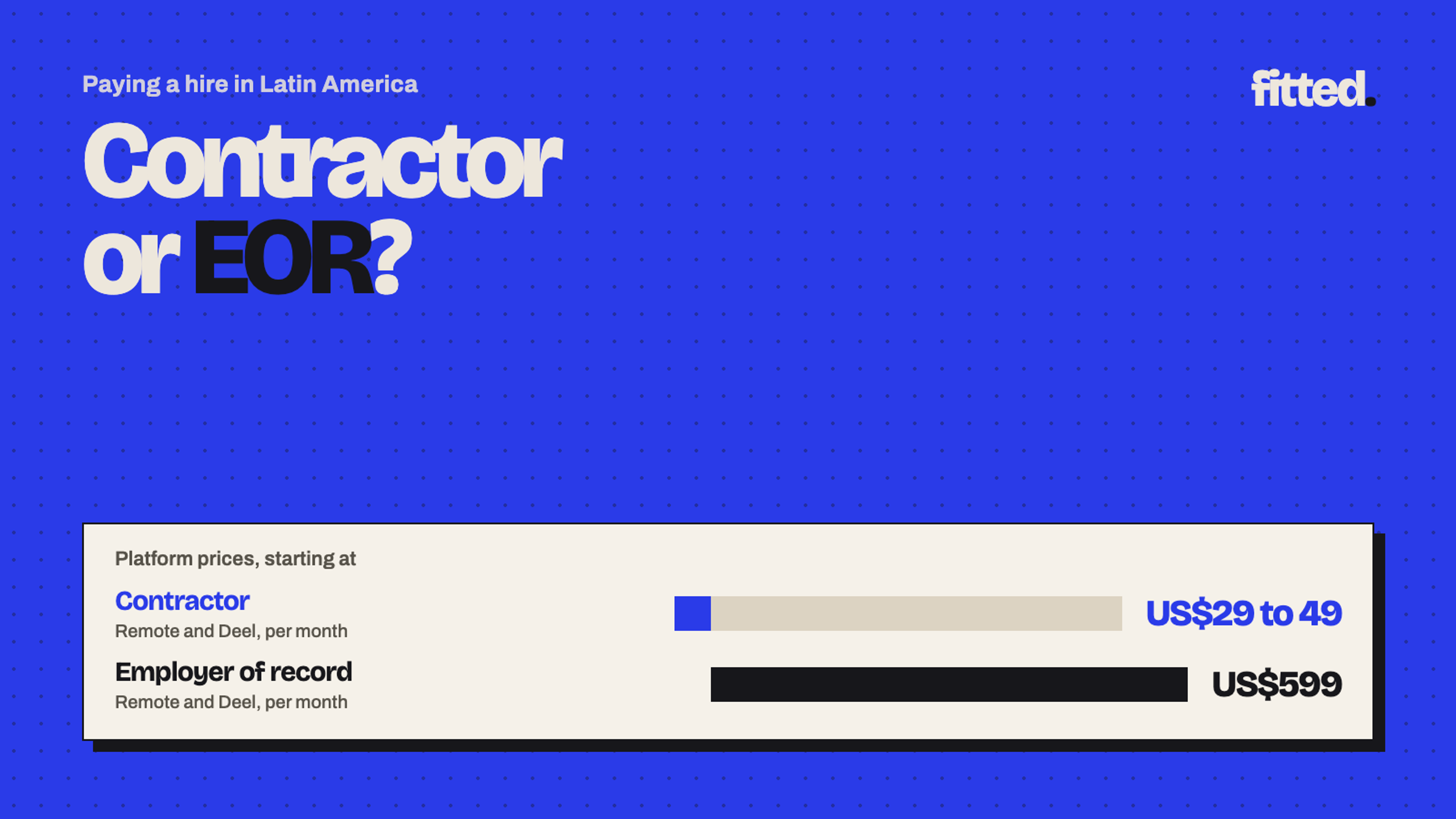
How US companies hire contractors in Latin America: contractor vs EOR
You found the right hire in Colombia. Here is how US companies pay them: as a contractor or through an employer of record, and what each costs.

The paid media test assignment: how to run one candidates respect
A good test shows how a media buyer thinks in two hours. A bad one is free consulting. How to design a paid media test assignment that works.