How to pay contractors in Latin America: the options US companies use
Platform, EOR or a direct transfer? How US companies pay contractors in Latin America, what each option costs in effort and the forms you need.
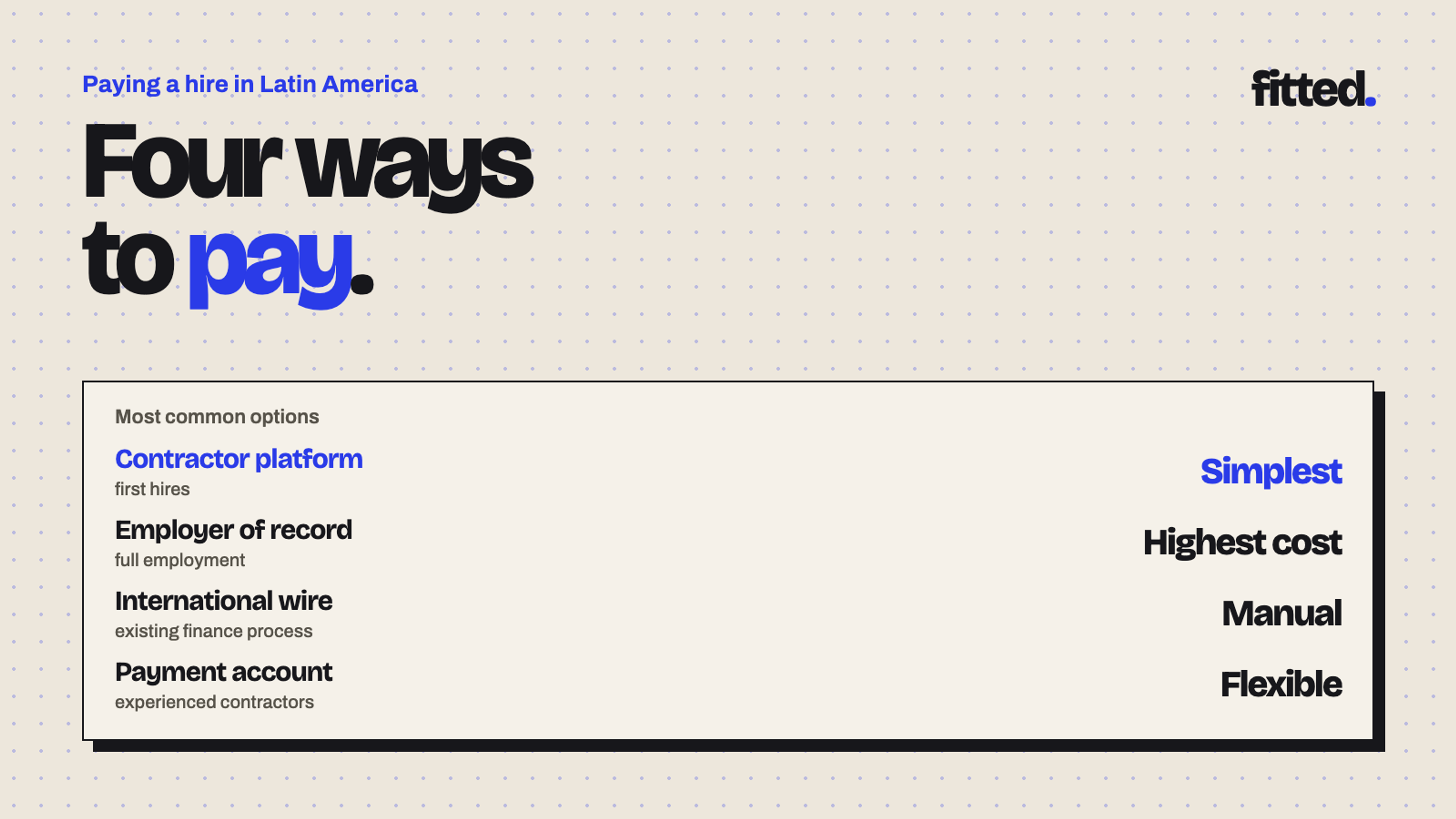
Most US companies pay contractors in Latin America in one of four ways: a contractor management platform, an employer of record, a direct international wire or a payment app that the contractor already uses. For a first hire, a contractor platform is usually the simplest, because it handles contracts, invoices and payouts in one place. Whatever you choose, pay in US dollars, on a fixed date, and agree on who covers the fees.
Payment is the part of a remote hire people worry about most, on both sides. Here is how the options compare and what to set up before the first invoice.
What are the main ways to pay contractors in Latin America?
| Option | How it works | Best for | Watch out for |
|---|---|---|---|
| Contractor platform | The platform holds the contract, collects invoices and pays out | First hires, small teams | Monthly fee per contractor |
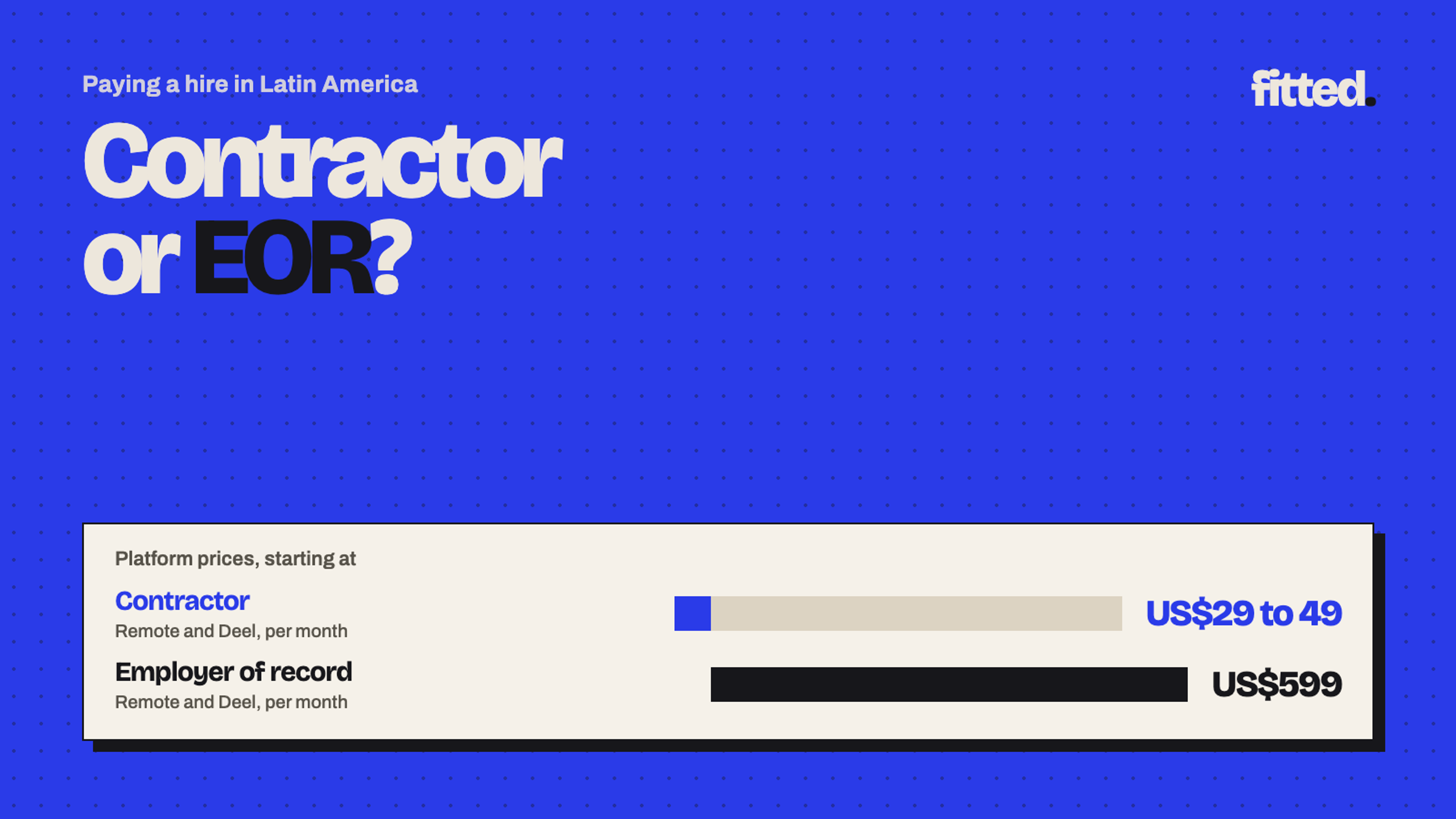
| Employer of record (EOR) | A local company employs the person on your behalf | Long-term roles, when you want local employment | Much higher monthly cost |
| International wire | You send a bank transfer from your US account | Companies with an existing finance process | Bank fees, slow transfers, manual invoices |
| Payment app or account | You pay into an account the contractor already uses for US clients | Experienced contractors with several clients | You still need a contract and invoices |
Common contractor platforms include Deel and Remote, which also offer EOR services. We compare their published prices in our guide on contractor vs EOR.
Is a contractor platform worth the fee?
For most first hires, yes. A platform gives you a standard contract, a place for the contractor to submit invoices, automatic payouts in the currency they prefer and a record of everything for your accountant.
It also reassures the candidate. Many senior people in the region have used these platforms before and trust them.
The fee matters less than the time it saves, especially if nobody on your team has handled international payments before.
When should you use an employer of record instead?
When you want the person to be a full employee in their country, with local benefits and the protections that come with employment. That can make sense for long-term, senior roles or when the candidate will only accept employment.
An EOR costs much more per month than a contractor setup, and it takes longer to start. For a first hire, most companies begin with a contractor agreement and revisit the question later.
Can you just send a wire transfer?
You can. Some companies already pay international vendors by wire and simply add the contractor to that process.
The downsides are practical. International wires can take several days, both banks may charge fees, and the exchange rate is often not great for the person receiving the money. You also need to collect invoices and keep the contract yourself.
If you choose this route, agree in writing on who pays the transfer fees, so the contractor actually receives the agreed amount.
What paperwork do you need to pay a foreign contractor?
Three things, at minimum.
- A written contractor agreement. Scope, rate, payment terms, notice period, confidentiality and ownership of work.
- A tax form from the contractor. US companies usually collect Form W-8BEN from individual non-US contractors to document that they are foreign persons. Contractor platforms collect it for you.
- Monthly invoices. The contractor issues an invoice for each payment. In some countries, such as Brazil, many contractors invoice through their own local company.
This is general information, not legal or tax advice. Ask your accountant about your specific situation, especially if you are hiring in several countries.
How do contractors in each country prefer to be paid?
It varies by person more than by country, so ask. Many senior contractors in Brazil, Colombia and Argentina already work with US clients and have a preferred setup.
Argentina deserves a specific note. Its currency and exchange rules have changed often in recent years, and many contractors there have strong preferences about how dollars reach them. Ask early, and be flexible where you can.
What payment terms work best?
Keep them simple and predictable:
- Monthly, on a fixed date. For example, the 5th of each month for the previous month.
- A fixed amount in US dollars. Not hourly, unless the role really is part-time.
- Fees agreed in advance. Ideally the company covers its side of transfer or platform fees.
- Clear rules for extra work. If you expect occasional weekend work around big launches, say how it is handled.
Late or irregular payment is one of the fastest ways to lose a good contractor. Paying on time, every time, builds trust quickly.
For the rest of the package, see our guide on making a job offer a remote candidate will accept.
Does a contractor setup create any risk?
The main one is misclassification: treating someone as an employee in practice while calling them a contractor. Rules differ by country. A good contractor agreement, a platform that follows local practice and advice from an accountant reduce that risk.
If the role is full-time, long-term and closely managed, it is worth discussing with your advisor whether an EOR is a better fit.
How fitted. fits into payment
You hire the person directly, so payment runs between you and your hire, through whichever setup suits you. We do not sit in the middle of payroll and we do not take a cut of the salary.
During the offer stage, we help you pick a setup the candidate is comfortable with. Our fee is flat: US$3,500 per hire, nothing upfront, paid only when your hire accepts.
FAQ
What is the easiest way to pay a contractor in Latin America?
A contractor management platform. It handles the contract, invoices and payouts, and collects tax forms for you.
Do I need a W-8BEN from a contractor in Latin America?
US companies usually collect Form W-8BEN from individual non-US contractors. Confirm with your accountant for your situation.
Should I pay Latin American contractors in US dollars?
Yes. A fixed monthly amount in US dollars is what most candidates prefer and expect.
Is a wire transfer a good way to pay a contractor?
It works, but it can be slow and expensive. Agree in advance on who pays the fees so the contractor receives the full amount.
Isadora Teodoro. Psychologist and recruiter with in-house and freelance HR experience. Runs talent mapping, screening and behavioral assessments at fitted. Published .
Related posts
How US companies hire contractors in Latin America: contractor vs EOR
You found the right hire in Colombia. Here is how US companies pay them: as a contractor or through an employer of record, and what each costs.
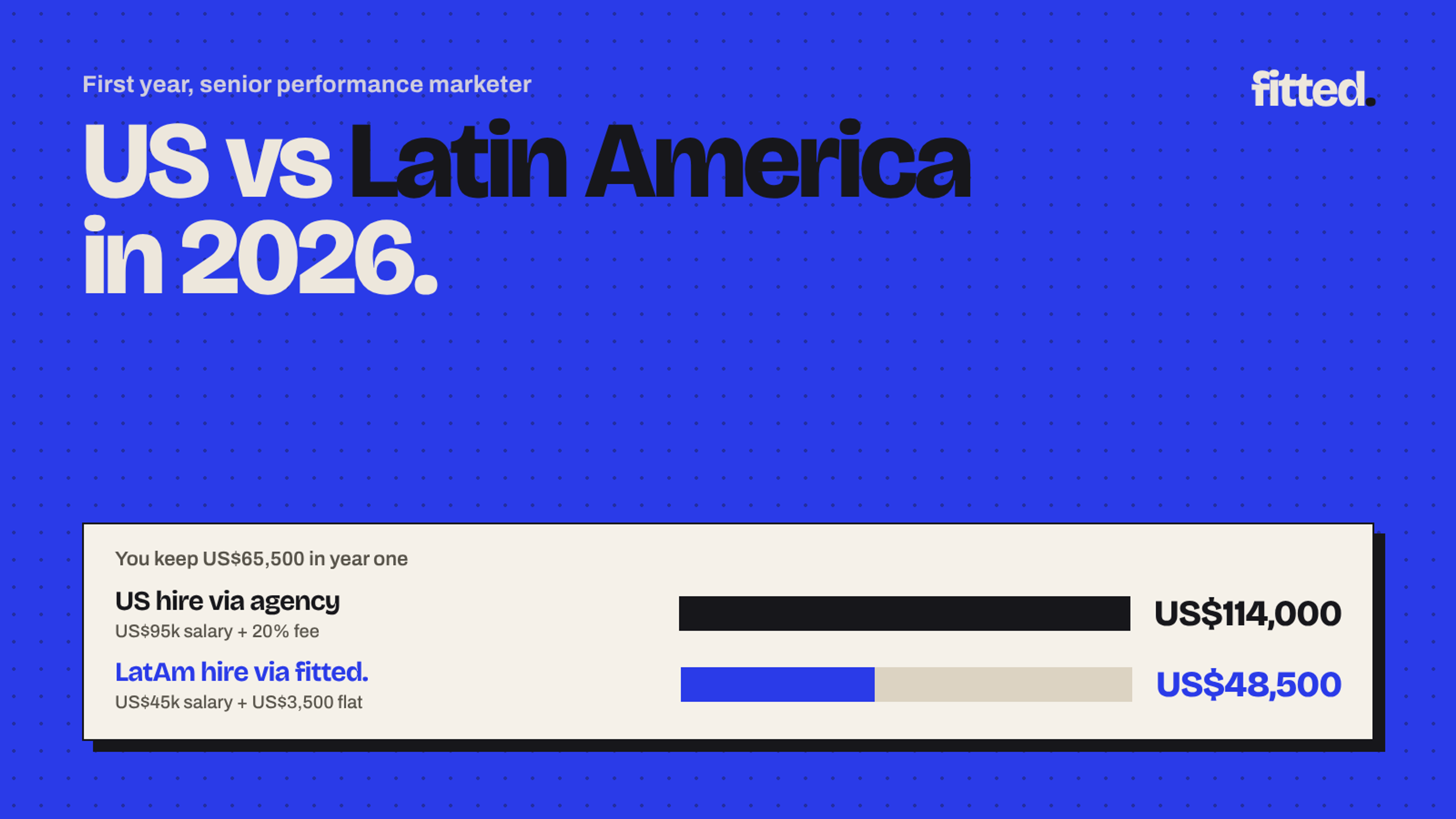
What is the cost to hire a performance marketer in the US vs Latin America in 2026?
A senior performance marketer costs US$85k to 110k a year in the US and about half in Latin America. Here is the first-year math, fees included.
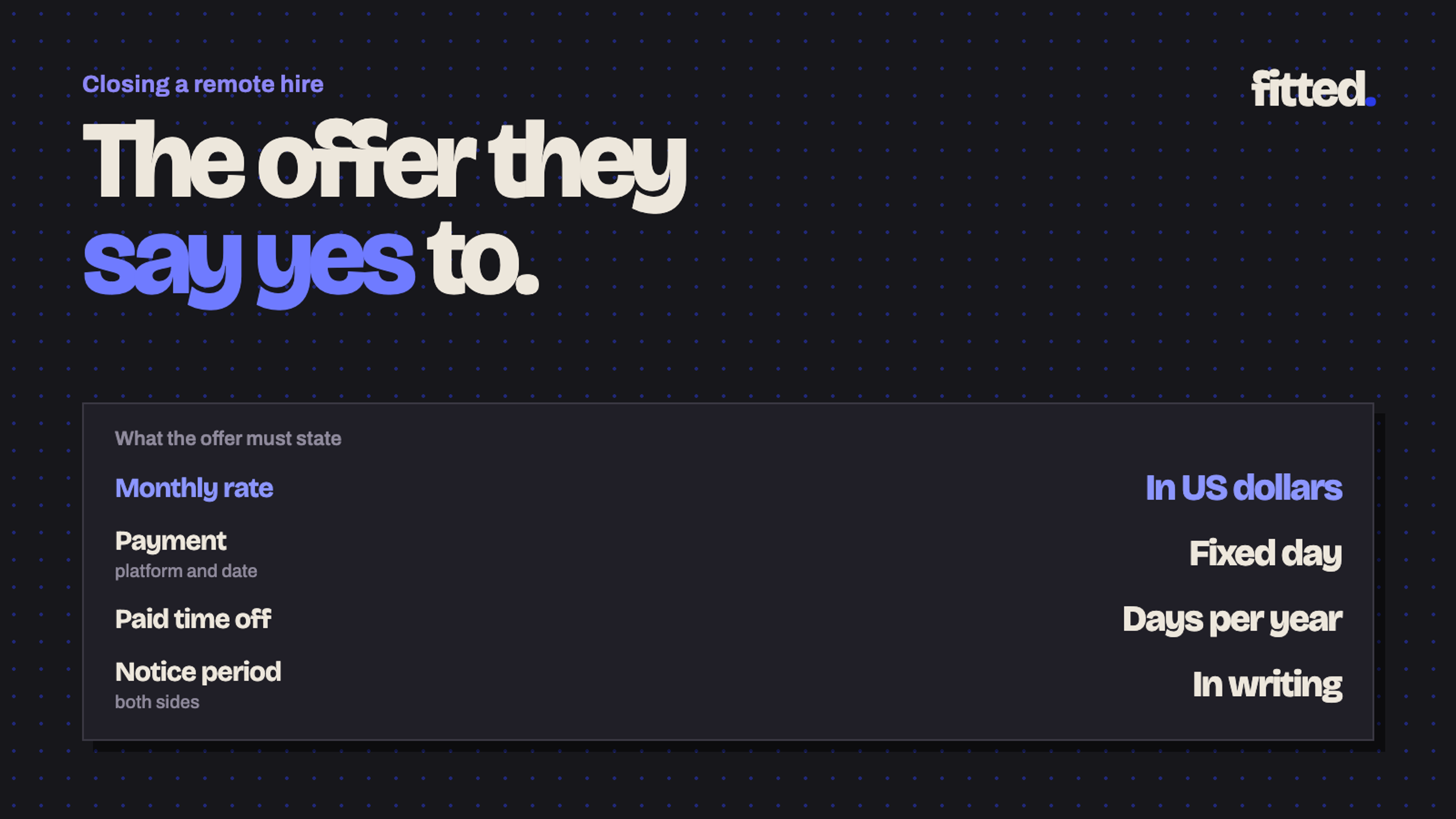
How to make a job offer a remote candidate in Latin America will accept
Your best candidate said yes in the interview and maybe to the offer. What a job offer for a remote contractor in Latin America needs to close.