How to make a job offer a remote candidate in Latin America will accept
Your best candidate said yes in the interview and maybe to the offer. What a job offer for a remote contractor in Latin America needs to close.
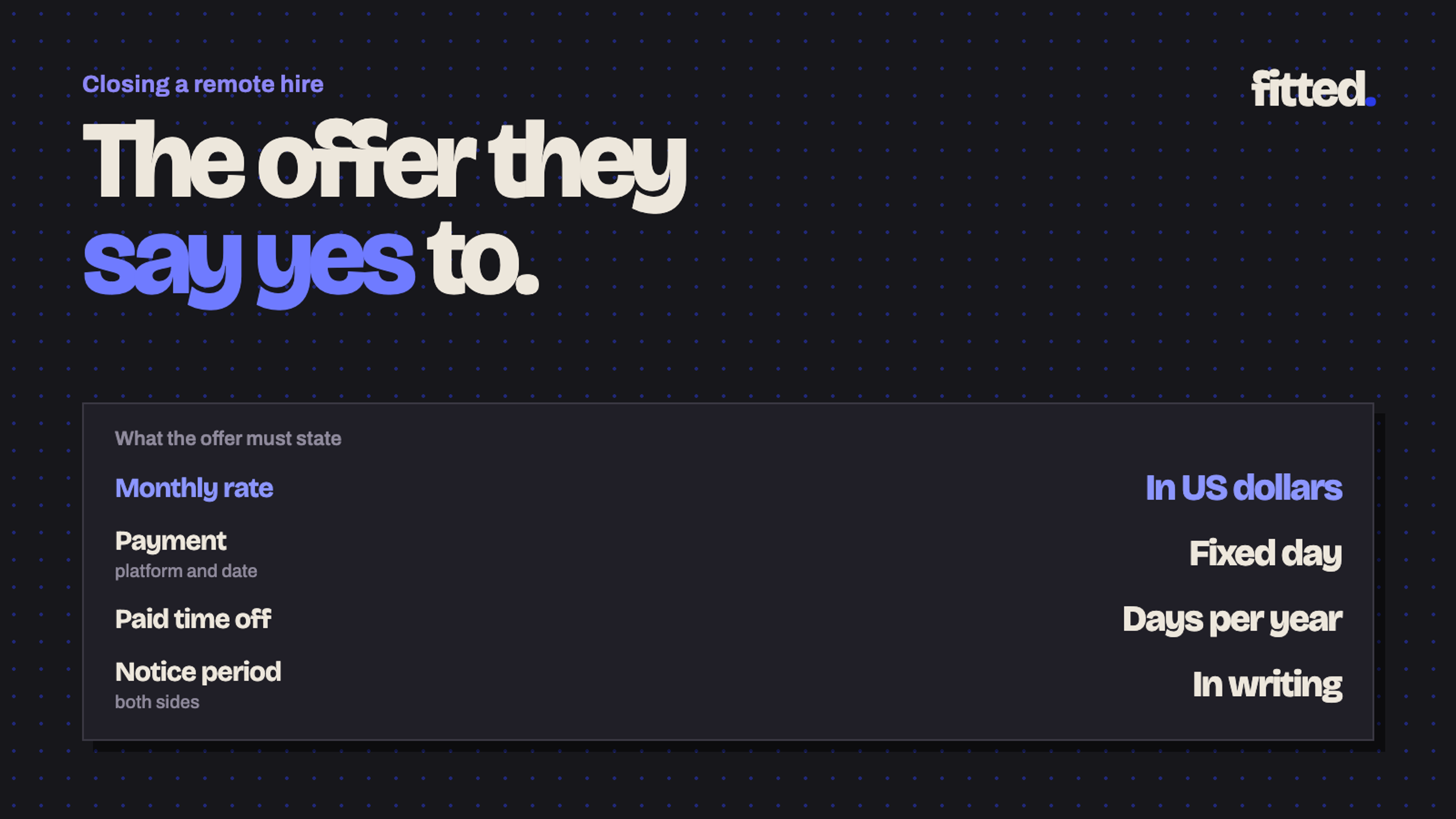
A strong job offer for a remote contractor in Latin America states the rate in US dollars, how and when payment arrives, how time off works, the notice period on both sides and a realistic start date. Candidates compare offers on certainty as much as on money. An offer that leaves those points vague often loses to a slightly lower one that answers them.
Good hires often slip at the offer stage for reasons that have nothing to do with salary. Here is what to include and how to present it.
Why do remote offers to Latin American candidates fall through?
Usually for one of three reasons. The offer is vague about something the candidate depends on, like payment timing. A counteroffer from their current employer arrives before yours is final. Or the process after the final interview takes too long and the candidate's enthusiasm cools.
Salary matters, of course. But senior people in Brazil, Colombia and Argentina who are open to US roles usually have more than one conversation going. The company that is clear and quick tends to win.
What should a job offer for a remote contractor in Latin America include?
| Item | What to state | Why it matters |
|---|---|---|
| Rate | Monthly amount in US dollars | Candidates plan around a fixed monthly figure |
| Payment | Platform, date and who pays transfer fees | Removes the biggest source of anxiety |
| Hours | Expected overlap with your time zone | Avoids surprises in the first week |
| Time off | Paid days per year and local holidays | Often missing from contractor offers |
| Notice | Days of notice for either side to end the contract | Gives both sides security |
| Equipment | Whether you provide a laptop or a stipend | Small cost, big signal |
| Start date | A date that allows for their current notice | Prevents a rushed, awkward exit |
| Review | When the rate will be reviewed | Shows a future in the role |
You do not need a long contract to cover these. A one page offer letter followed by the formal agreement is common.
Should you pay in US dollars?
Yes. Most candidates in the region strongly prefer a dollar rate, because local currencies can move a lot in a year. A fixed dollar amount gives them stability and makes your offer easy to compare with others.
State the rate monthly. Annual figures are common in the US, but many people in Latin America think in monthly income, and a monthly number avoids confusion.
How should you handle payment?
Say exactly how the money will arrive: through an employer of record, a contractor platform or a direct international transfer. Name the day of the month and who covers the fees.
If you have not decided on the setup yet, read our guide on contractor vs EOR before you send the offer. Changing the payment setup after the candidate accepts creates doubt at the worst moment.
Do contractors in Latin America expect paid time off?
Many do, especially senior people who are leaving a local employment contract that included paid vacation. A contractor agreement does not require it, but offering a set number of paid days per year makes your offer much more competitive.
Also say how you will handle local public holidays. Brazil, Colombia and Argentina each have their own calendar, and a simple rule, such as "you take your local holidays and keep us informed", removes a recurring question.
How do you set a start date?
Ask the candidate how much notice they owe their current employer before you propose a date. Many senior people will need a few weeks, and some want a short break between roles.
Pushing for a start date that forces them to leave badly is a poor first impression. It also tells them how you will treat their time later.
How fast should you move after the final interview?
As fast as you reasonably can. Send the offer within two or three working days of the final interview if you can. Give the candidate a clear deadline to respond, usually three to five working days, and be available for questions.
If you need more time internally, tell the candidate when they will hear from you. Silence is what loses people, more than the wait itself.
What should you do if the candidate gets a counteroffer?
Ask what matters to them besides the money. Counteroffers often match salary but not the other reasons the person was looking: working with a US team, owning bigger budgets, more interesting work.
Remind them of those reasons honestly. If the gap is only salary and it is small, consider closing it. Losing a strong candidate over a few hundred dollars a month usually costs more in a repeated search.
How should you present the offer?
On a call first, then in writing. A short call lets you explain the offer, show enthusiasm and answer questions right away. The written version follows the same day.
Keep the tone warm and direct. The candidate should finish the call knowing the rate, the start date, how they get paid and what happens next.
For what comes after the yes, see our guide to onboarding a remote media buyer.
How we support offers at fitted.
You hire the candidate directly, as an employee or a contractor. We support the offer stage: we help you shape the package, talk to the candidate about what matters to them and keep the timeline moving.
Our fee is flat: US$3,500 per hire, nothing upfront, paid only when your hire accepts. It does not change with the salary you offer, so our advice on the package is not tied to a percentage.
FAQ
Should I pay a remote contractor in Latin America in US dollars?
Yes. Most candidates prefer a fixed monthly rate in US dollars because local currencies can be volatile.
What should a contractor offer letter include?
The monthly rate, payment platform and date, expected hours, paid time off, notice period, equipment, start date and when the rate will be reviewed.
Do contractors in Latin America expect paid vacation?
Many senior candidates do, especially if they are leaving a local job that included it. Offering paid days makes your offer more competitive.
How long should a candidate have to accept an offer?
Three to five working days is common. Make yourself available for questions during that time.
Isadora Teodoro. Psychologist and recruiter with in-house and freelance HR experience. Runs talent mapping, screening and behavioral assessments at fitted. Published .
Related posts
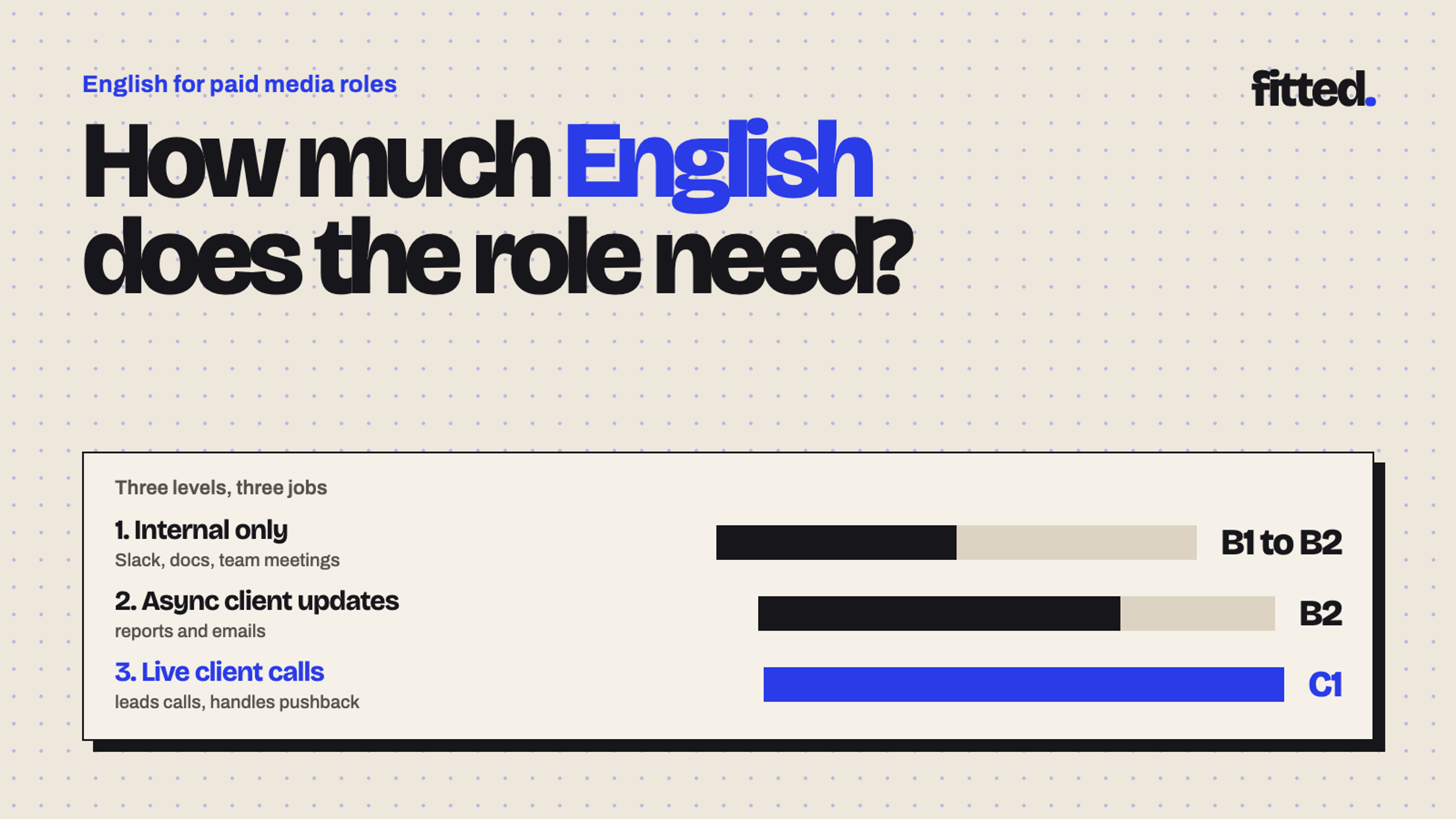
English level for remote marketing jobs: what a client-facing paid media role needs
Client calls and internal Slack need different levels of English. Most job posts don't say which. Here is how to define the level your role needs.
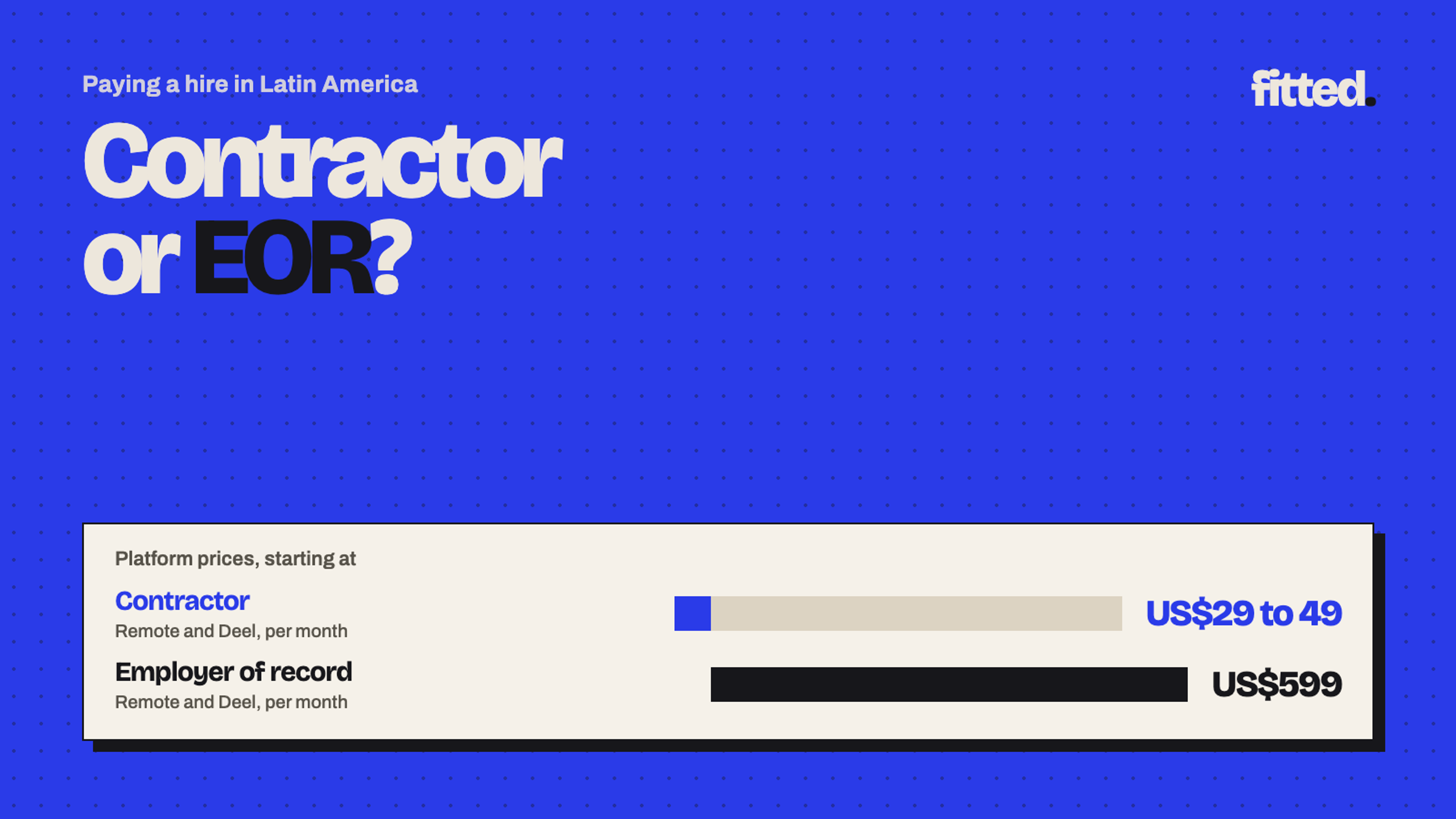
How US companies hire contractors in Latin America: contractor vs EOR
You found the right hire in Colombia. Here is how US companies pay them: as a contractor or through an employer of record, and what each costs.
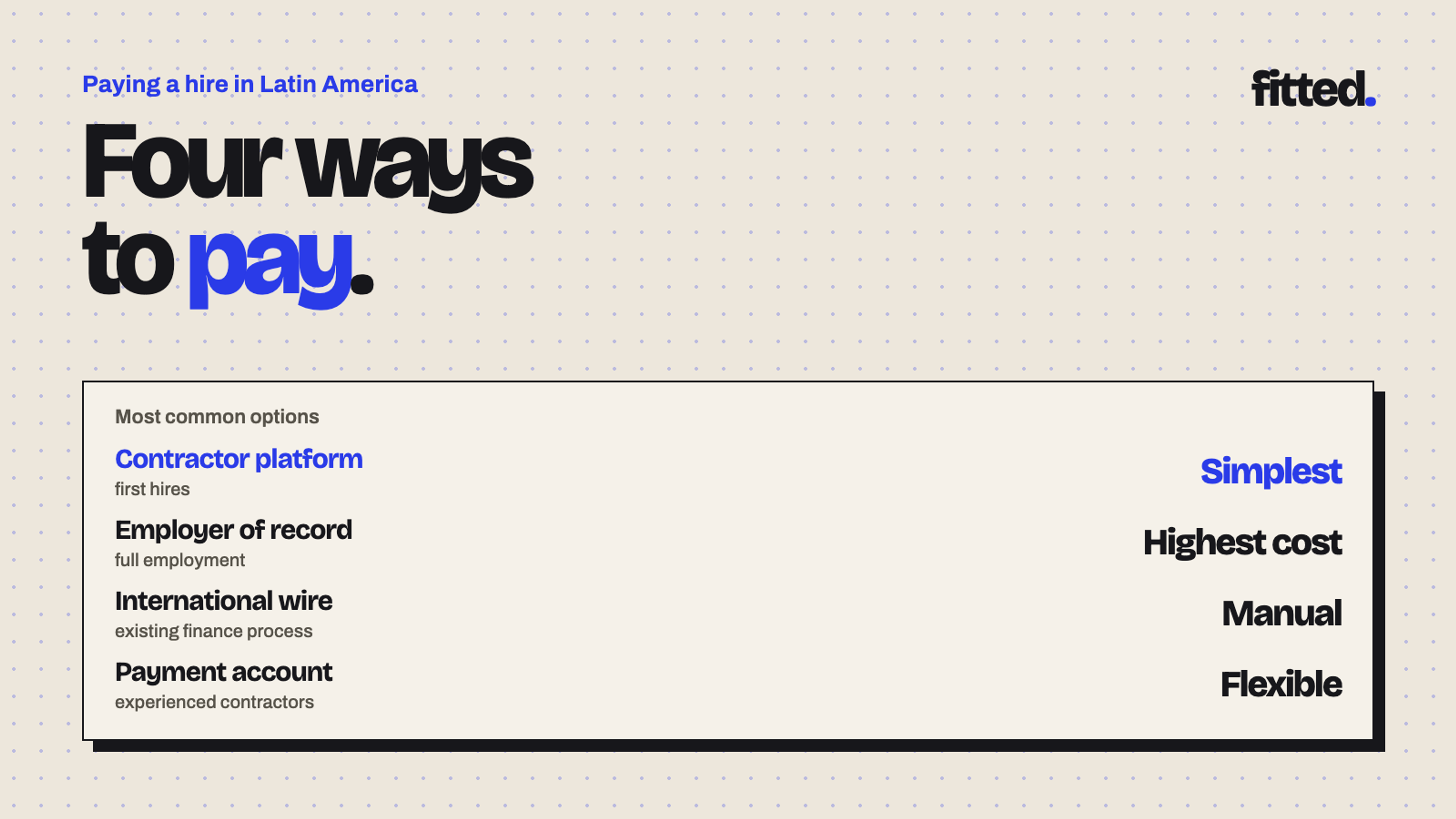
How to pay contractors in Latin America: the options US companies use
Platform, EOR or a direct transfer? How US companies pay contractors in Latin America, what each option costs in effort and the forms you need.