Onboarding a remote media buyer: the first 30 days
The hire is done. The next 30 days decide whether it works. A week by week plan with access, audit, first test and reporting.
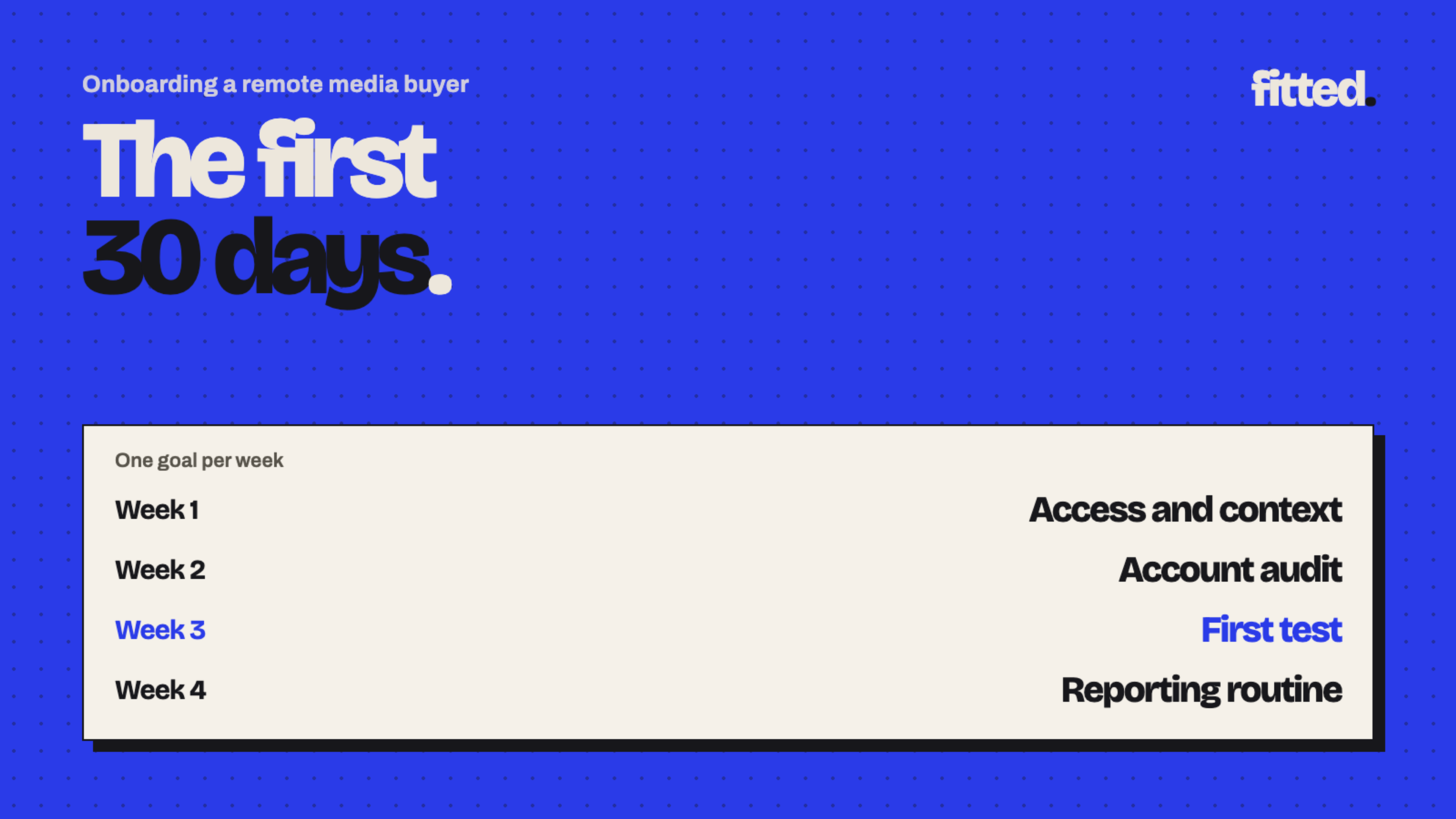
The hire is done. The next 30 days decide whether it works. Onboarding a remote media buyer comes down to four weeks with one goal each: access in week one, an account audit in week two, a first test in week three and a reporting routine in week four. Keep that order and your new hire will be making useful decisions within a month.
This guide walks through each week, the checklist we recommend, and the mistakes that slow remote hires down.
Why do remote media buyer hires fail in the first month?
Rarely because of skill. Usually because of setup.
The new hire waits three days for ad account access. Nobody tells them which numbers the business actually cares about. They launch something in week one to look busy, before they understand the account. By week four, everyone is frustrated.
All of that is avoidable with a plan. The plan below assumes a senior hire who already knows the platforms. What they need from you is context.
What does a plan for onboarding a remote media buyer look like?
| Week | Goal | The new hire delivers | You provide |
|---|---|---|---|
| 1 | Access and context | Confirmation that every account and tool works | Access, brand docs, goals, a kickoff call |
| 2 | Account audit | A written audit with priorities | Time to answer questions, past reports |
| 3 | First test | One test launched with a clear hypothesis | Approval on budget and creative |
| 4 | Reporting routine | First weekly report and a 60 day plan | Feedback on the format |
Week 1: what access does a remote media buyer need?
Have everything ready before day one if you can. The list is usually:
- Ad accounts: Meta Business Manager, Google Ads, TikTok, LinkedIn, whichever you run, with the right permission level.
- Analytics: GA4 and any attribution or BI tool you use.
- Tracking: tag manager access, or at least someone who can make changes quickly.
- Creative: the shared drive, brand guidelines and past winning ads.
- Communication: Slack or Teams, the shared calendar and the project tool.
- Business context: margins, average order value or deal size, and the goal for the quarter.
The last item is the one most companies forget. A media buyer without your margin numbers will optimize the dashboard, not the business.
Finish week one with a kickoff call in your shared working hours. Hours matter here: we cover them in the Latin America time zone overlap with US teams.
Week 2: what should the account audit cover?
Ask for a written audit by the end of week two, and ask them not to change anything major before it is done. A good audit covers:
- Tracking: are conversions firing correctly and matching your backend numbers?
- Structure: do campaigns and ad sets match how the business sells?
- Spend: where is money going, and what is it returning?
- Creative: which concepts work, which are tired, what has never been tested?
- Priorities: the three changes they would make first, with the reason for each.
The audit tells you as much about your hire as about your account. A clear, prioritized audit is a very good sign.
Week 3: how should the first test be set up?
One test, not ten. Pick the highest priority from the audit and run it properly.
The test should have a written hypothesis, a fair setup, a budget you approved and a date to read results. Flat results are fine. The point of the first test is to see how your hire thinks and how you work together, not to win.
If you want a reminder of what good testing sounds like, it is the same thing we listen for in our media buyer interview questions.
Week 4: what reporting routine works for remote teams?
By the end of the month, agree on a rhythm you can keep:
- Weekly written report: spend, results against goal, what changed and what is next. Short, the same format every week.
- Weekly live review: 30 minutes in the shared hours to discuss the report and make decisions.
- Daily async check-in: a few lines in Slack on anything unusual.
- Monthly plan: the tests and budget changes for the next month.
Finish week four with a 60 day plan from the new hire. It turns onboarding into ownership.
What mistakes slow remote onboarding down?
From experience on remote paid media teams, these are the common ones:
- Late access. Every day without access is a lost day.
- No business numbers. Without margins and goals, decisions drift toward platform metrics.
- Pressure to launch in week one. It produces activity, not results.
- No single point of contact. The hire needs one person who answers questions the same day.
- Silence about expectations. Say what "good" looks like at 30, 60 and 90 days.
What should you check at day 30?
Hold a short review at the end of the month, in your shared working hours. Keep it simple and use the same questions every time:
- Access: does the new hire still wait on anyone for anything?
- Audit: were the top priorities from week two the right ones?
- First test: was it set up well, whatever the result?
- Reporting: is the weekly report useful to you, or does it need changes?
- Ownership: which decisions is the new hire making alone now, and which still go through you?
The last question is the real measure of onboarding. By day 30 a senior hire should own the day to day of at least part of the account. If everything still goes through you, find out what is missing: access, context or trust.
How does fitted. help after the hire?
The search ends when your hire accepts, but we check in after they start. If something is not working in the first weeks, we want to know early.
Because every candidate was interviewed in English by a performance marketer and scored on the same five points, you also start onboarding with a written scorecard. It tells you where your new hire is strongest and where to support them first.
FAQ
What should a remote media buyer do in their first week?
Get access to every ad account, analytics and creative tool, learn the business goals and margins, and join a kickoff call. No major changes yet.
When should a new media buyer start making changes?
After a written account audit, usually at the end of week two. The first change should be one well designed test, approved by you.
What should be in a media buyer's weekly report?
Spend, results against goal, what changed that week and what is planned next, in the same short format every week.
How long does it take a remote media buyer to ramp up?
With access ready and a clear plan, most senior hires are making useful decisions within about 30 days. That is a fitted. estimate, not a guarantee.
Isadora Teodoro. Psychologist and recruiter with in-house and freelance HR experience. Runs talent mapping, screening and behavioral assessments at fitted. Published .
Related posts
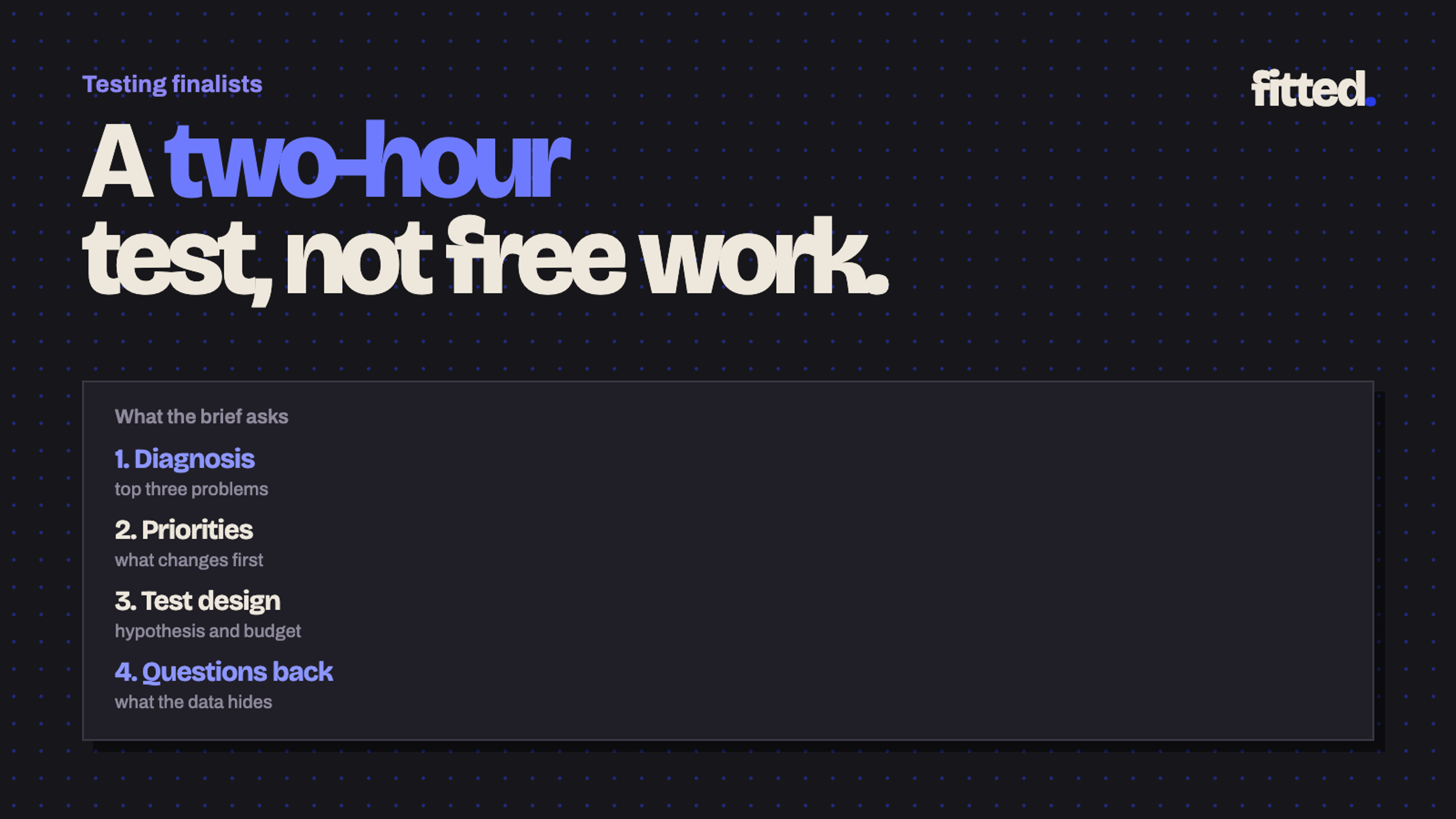
The paid media test assignment: how to run one candidates respect
A good test shows how a media buyer thinks in two hours. A bad one is free consulting. How to design a paid media test assignment that works.
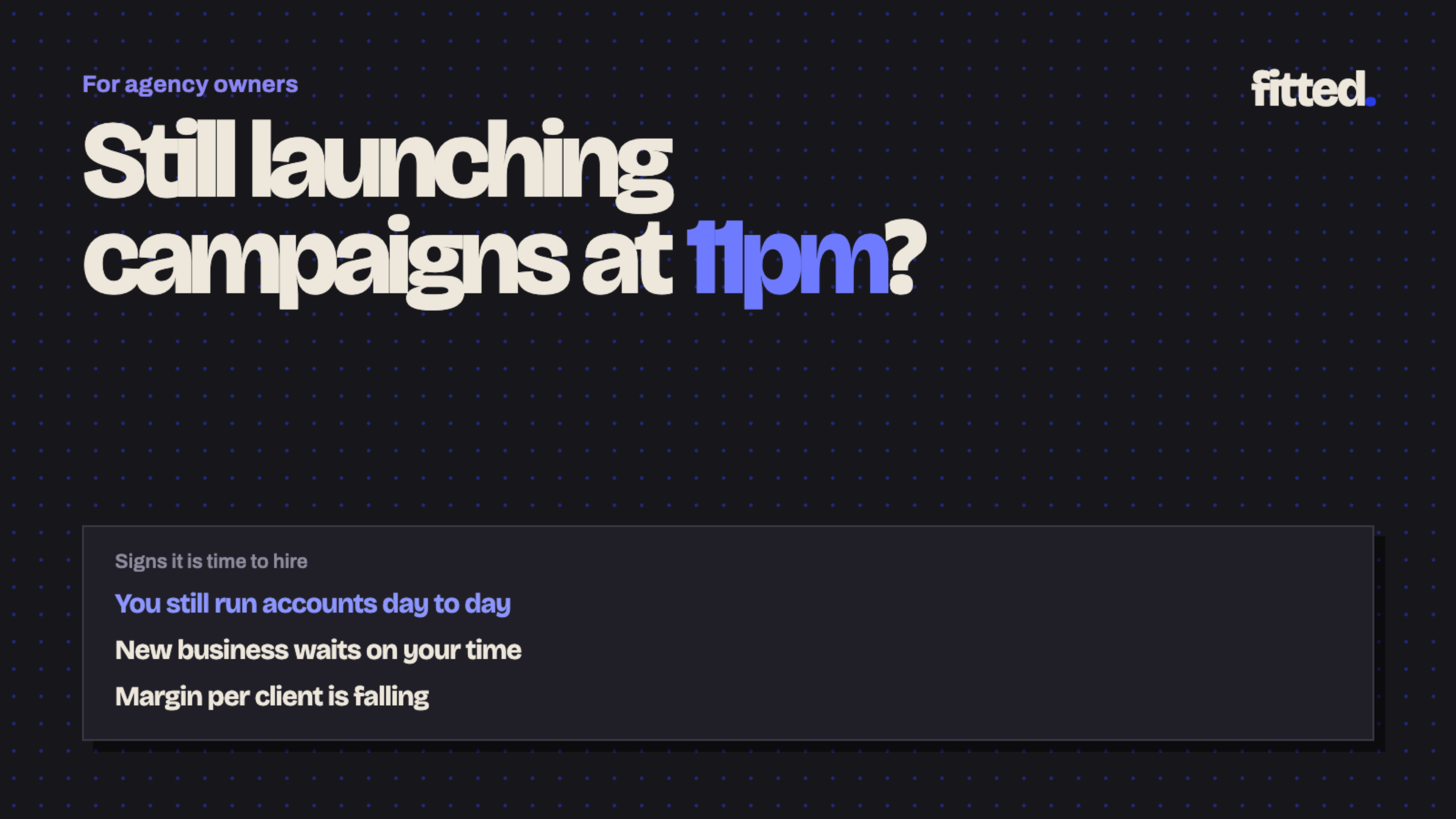
Agency owners: when to hire a media buyer for your agency
If you're still the one launching campaigns at 11pm, you're late. Five signals it is time for your agency's first senior media buyer.
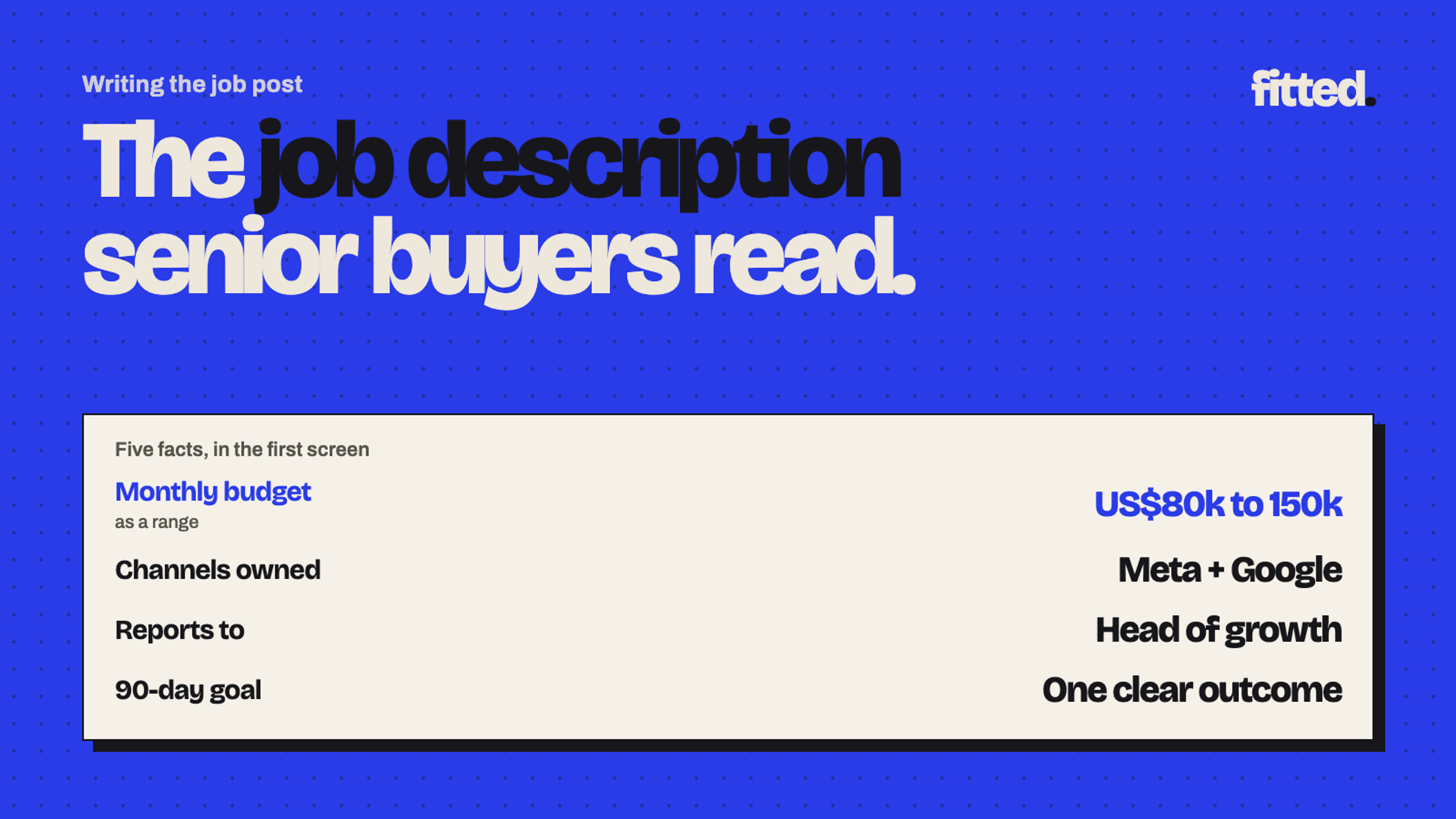
How to write a media buyer job description that attracts senior candidates
Most media buyer job descriptions list tools and skip the job. A template that tells senior candidates what they will own, spend and decide.