English level for remote marketing jobs: what a client-facing paid media role needs
Client calls and internal Slack need different levels of English. Most job posts don't say which. Here is how to define the level your role needs.
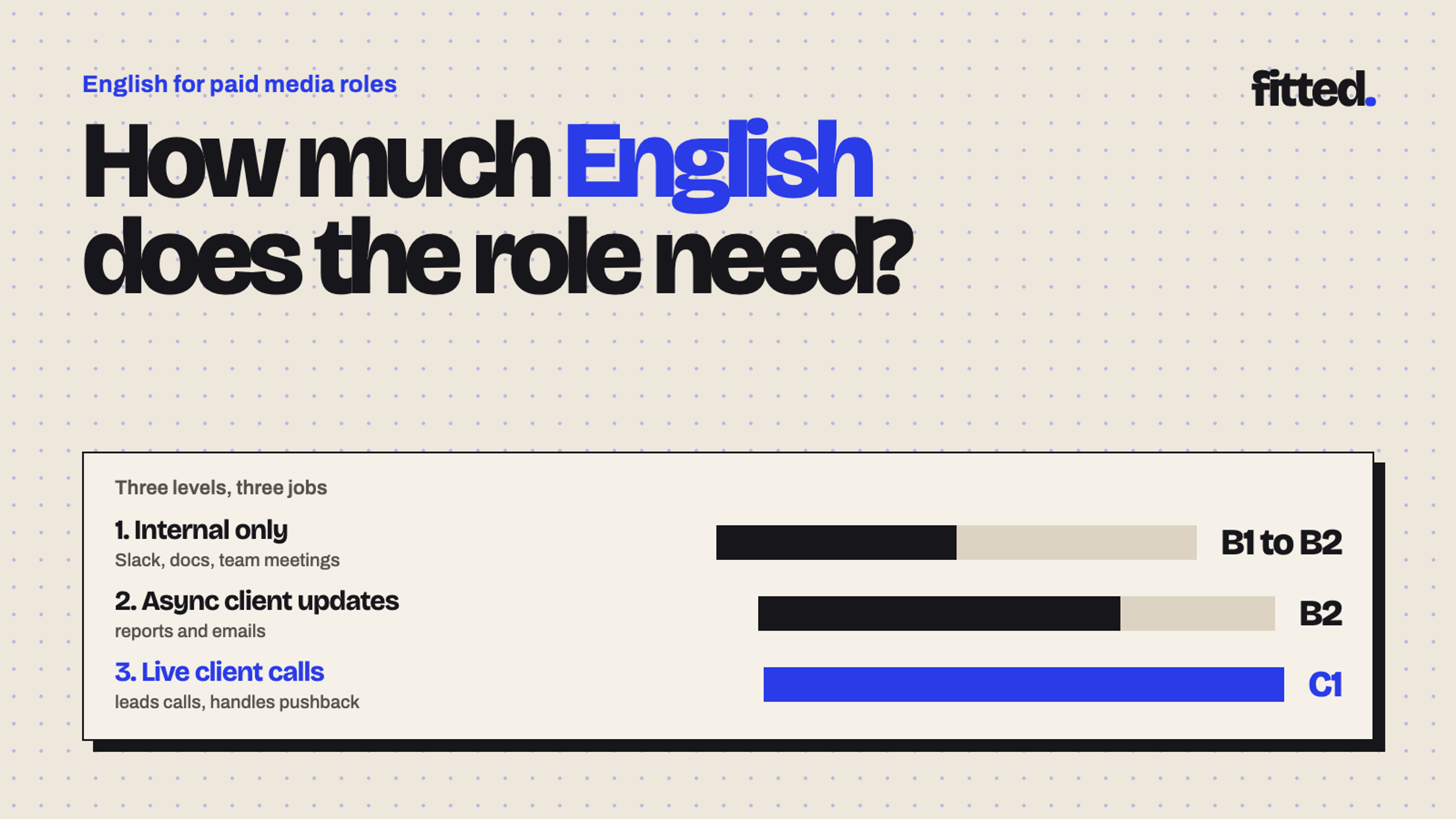
Client calls and internal Slack need different levels of English. Most job posts don't say which. The right English level for remote marketing jobs depends on where the person will use it: internal written work, async updates to clients, or leading live client calls. Define that first, then interview for it.
This article breaks down the three levels we use when hiring paid media people, how they map to common language scales, and how to test them in an interview.
Why does "fluent English" not mean much in a job post?
Because people use the word for very different things. A candidate who reads documentation and writes clear Slack messages may call themselves fluent. So may someone who leads tense client calls every week.
Both can be true. They are just different jobs.
When a job post only says "fluent English", you get applicants from both groups and no way to sort them before the interview. When it says which situations the person will handle in English, you get far fewer surprises.
What are the three English levels for a paid media role?
| Level | What the person does in English | Typical roles |
|---|---|---|
| 1. Internal only | Reads briefs, writes Slack and docs, joins team meetings | Media buyer inside a team, execution focus |
| 2. Async client communication | Writes client reports and emails, answers questions in writing | Account owner who reports to clients |
| 3. Live client calls | Leads calls, presents results, handles pushback and bad news | Senior or lead role, client-facing |
Level 3 is not just "more English". It is English under pressure: explaining why results dropped, disagreeing with a client politely, and thinking out loud while someone waits.
How do these levels map to CEFR?
The Common European Framework of Reference for Languages (CEFR), created by the Council of Europe, groups language ability into six levels, from A1 to C2, across basic, independent and proficient users.
As a rough guide, and this mapping is a fitted. estimate rather than an official one:
- Internal only: around B1 to B2, an independent user.
- Async client communication: solid B2.
- Live client calls: C1, a proficient user.
Certificates help, but they measure general English. They do not measure whether someone can explain a broken attribution setup to a frustrated client. Only a role-specific interview does that.
Does national English proficiency tell you anything about a candidate?
Very little. The EF English Proficiency Index 2025 puts Argentina at 575 points, 26th in the world, and the global average at 488. Brazil scores 482 and Colombia 480.
Those are national averages across millions of people. The senior media buyer you want is not average. Many work for US and European clients already and use English every day.
So do not filter by country. Filter by the interview.
How do you test English in a paid media interview?
Run the whole interview in English, about the candidate's own work. That is the most realistic test there is, and it costs nothing extra.
Then add these checks, depending on the level you need:
- For internal roles: ask them to explain one campaign decision in three sentences, as if writing to a teammate.
- For async client roles: ask for a short written update on a made-up performance drop, and read it for clarity and tone.
- For live client roles: play the client. Push back on a result and see how they respond, live.
Listen for clarity, not accent. A strong accent with clear structure works on a client call. A neutral accent with no structure does not.
For the rest of the interview, see how to interview a media buyer.
How do you set the English level for remote marketing jobs on your team?
Start from the work, not the candidate. List the situations the person will face in English in a normal week, then pick the highest level any of them needs.
A simple way to do it:
- Write down every recurring meeting the role joins, and who leads it.
- Mark which ones include clients and which are internal only.
- Note the written work, such as reports, emails and briefs, and who reads it.
- Decide the level from the most demanding item on the list.
Be honest about growth too. If the role is internal today but will take over client calls in six months, hire for the future level, or plan support for that step.
One more point: the level you need is not the level you test for in a perfect setting. Test the hardest real situation, such as a client asking why results dropped, because that is where weak English shows first.
What should you write in the job post instead of "fluent English"?
Name the situations. For example:
- "You will write weekly performance updates to US clients in English."
- "You will lead a 30 minute weekly call with two US clients."
- "Internal communication is in English on Slack and in docs."
Candidates self-select better, and your interview can check the exact skill you need.
How do we score spoken English at fitted.?
Spoken English is one of the five points on our paid media candidate scorecard. Every candidate is interviewed in English by a performance marketer, about accounts they actually ran.
We score from 1 to 10 and write which setting the person is ready for: client calls, internal work, or somewhere in between. As a recruiter and psychologist, I pay close attention to how candidates handle the uncomfortable parts of the conversation, because that is what client calls are made of.
You get that read before you meet anyone.
FAQ
What English level do you need for a remote marketing job?
It depends on the role. Internal work needs around B1 to B2, written client communication a solid B2, and leading live client calls around C1. These are fitted. estimates, not official requirements.
Is a language certificate enough to judge English for a client-facing role?
No. Certificates measure general English. A role-specific interview, in English, about the candidate's own work, shows whether they can handle real client situations.
Should I hire from a country with a higher English proficiency score?
National scores are averages across millions of people and say little about one senior candidate. Interview each candidate in English instead.
How do I test a media buyer's English for client calls?
Play the client in the interview. Push back on a result and listen for clarity, structure and calm, not accent.
Can a media buyer improve their English after being hired?
Yes, and many do, especially with daily use on a US team. But hire for the level the role needs in its first three months. If the role will become client-facing later, agree on a plan and a timeline for that step before the offer, so expectations are clear on both sides.
Isadora Teodoro. Psychologist and recruiter with in-house and freelance HR experience. Runs talent mapping, screening and behavioral assessments at fitted. Published .
Related posts
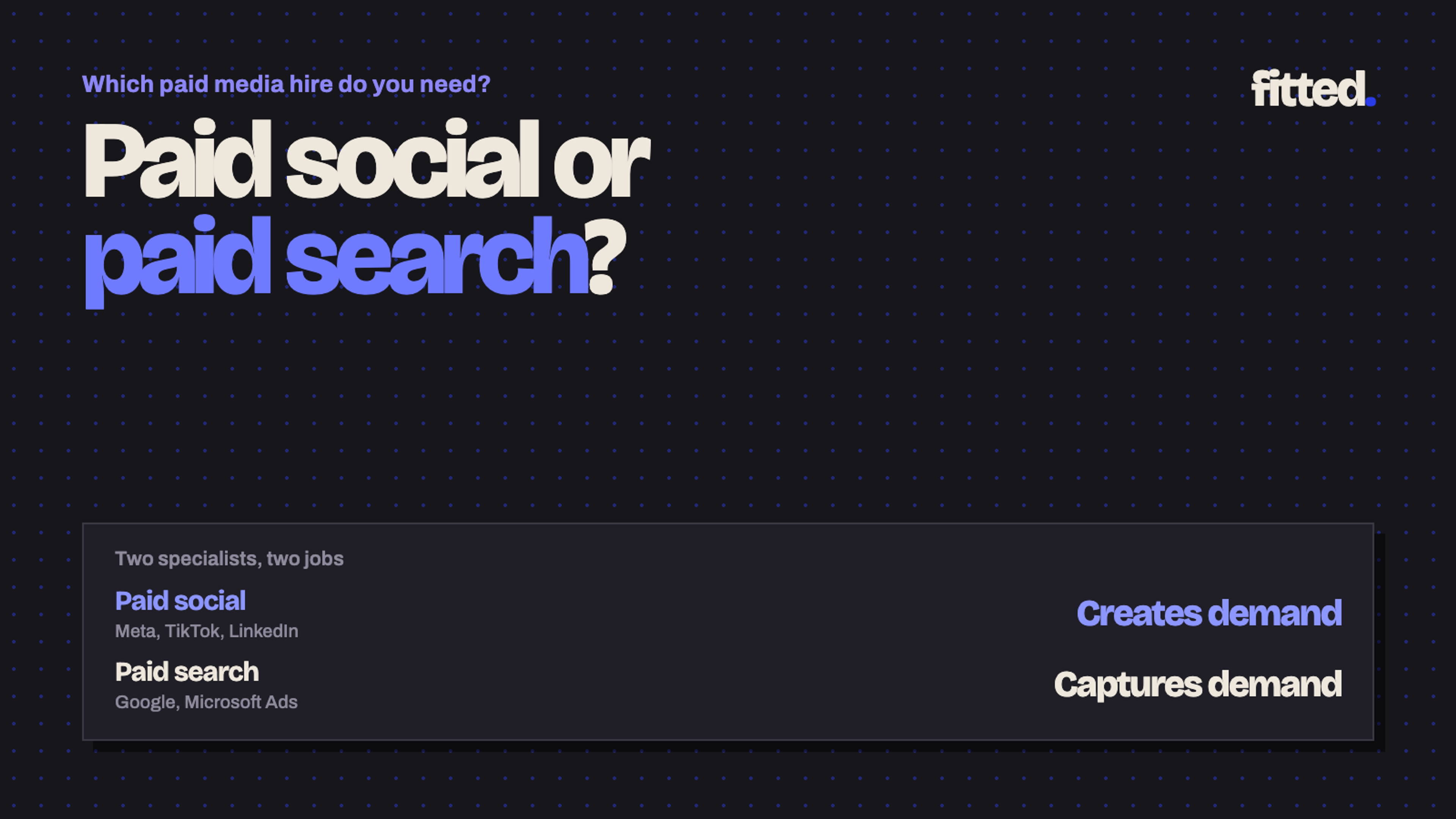
Paid social vs paid search specialist: which hire do you actually need?
Most job posts ask for both. Most great candidates are strong in one. A decision guide by business model to pick the right specialist.
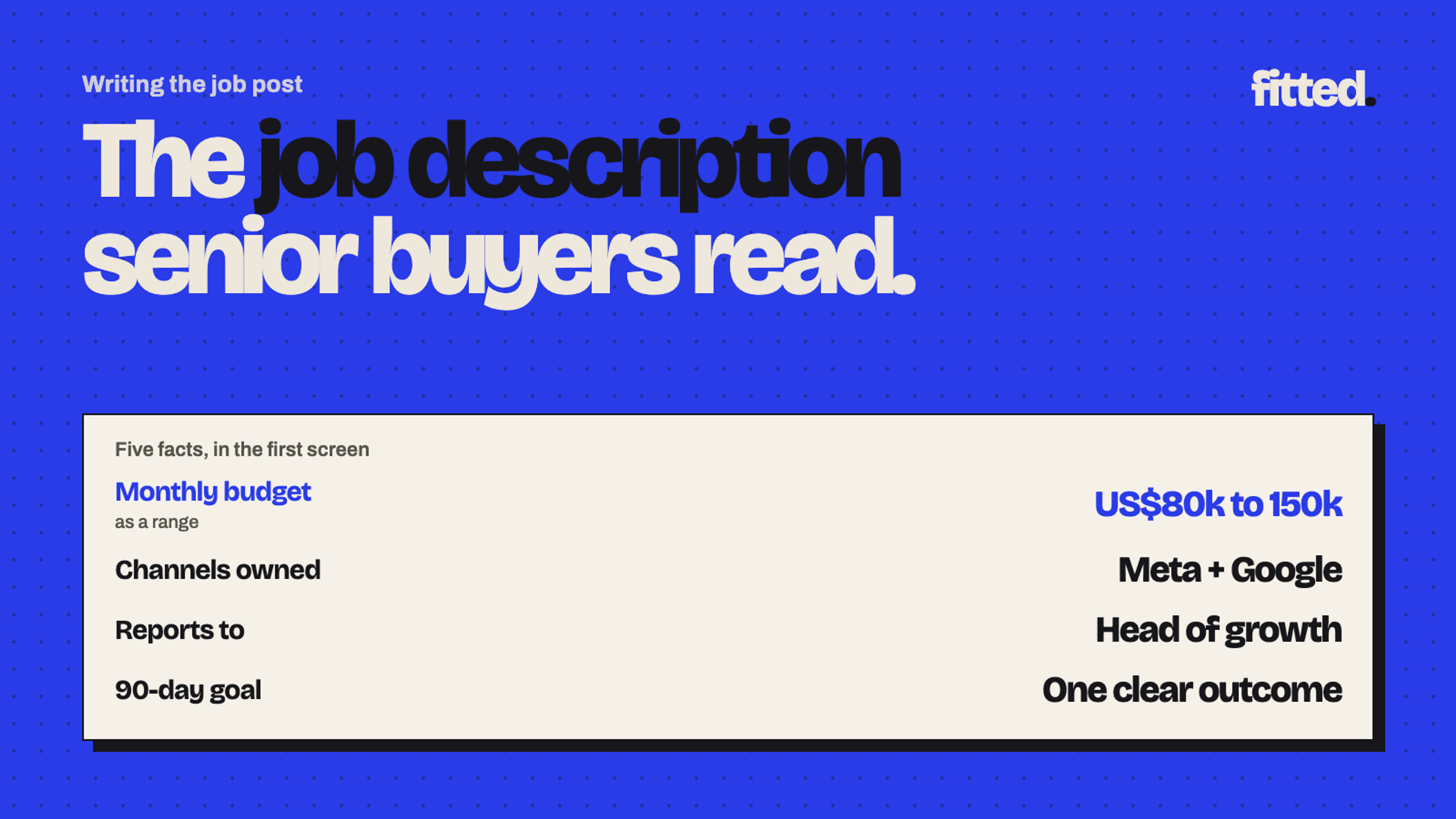
How to write a media buyer job description that attracts senior candidates
Most media buyer job descriptions list tools and skip the job. A template that tells senior candidates what they will own, spend and decide.
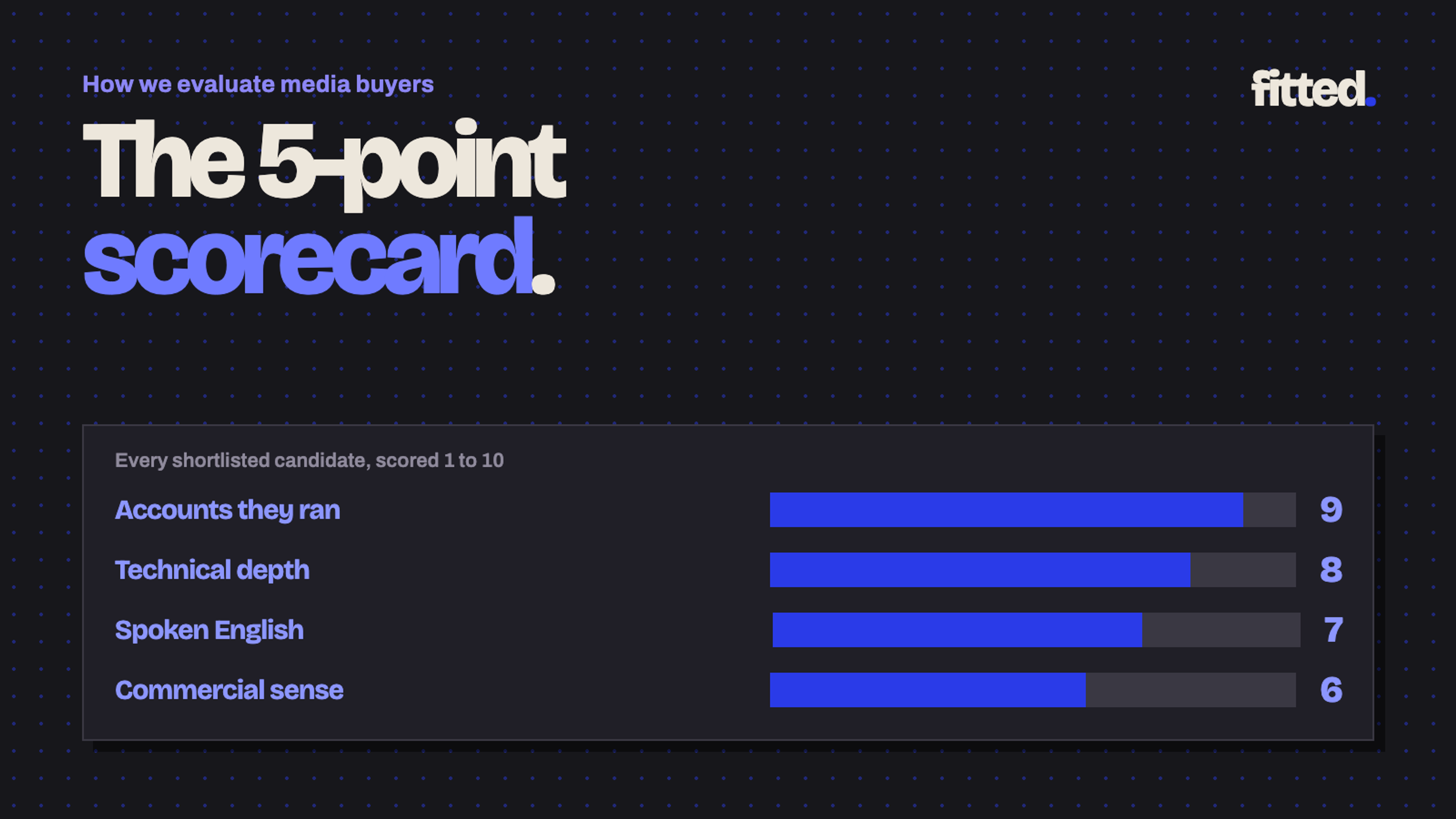
The 5-point paid media candidate scorecard we use to evaluate media buyers
Every candidate we shortlist is scored on the same five points. Here is the scorecard, what each score means and how to use it to compare candidates.