The 5-point paid media candidate scorecard we use to evaluate media buyers
Every candidate we shortlist is scored on the same five points. Here is the scorecard, what each score means and how to use it to compare candidates.
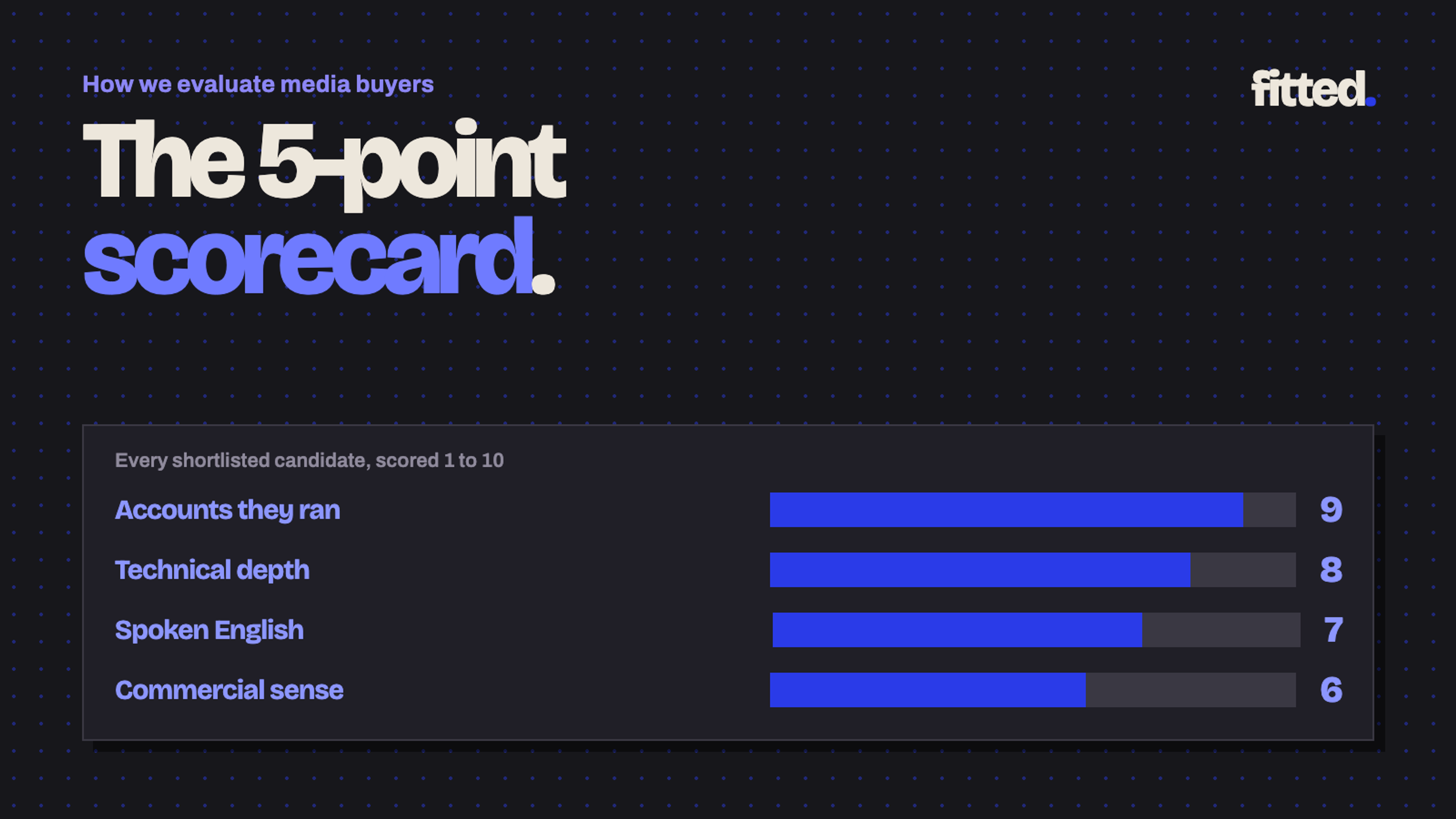
Every candidate we shortlist is scored on the same five points, so you can compare them side by side. A paid media candidate scorecard turns an interview into evidence: accounts they ran, technical depth, spoken English, salary and hours, and commercial sense, each scored from 1 to 10 with a written note.
This is the exact scorecard we use at fitted. You can copy it for your own hiring. Below are the five points, what high and low scores sound like, and how to read the result.
Why use a scorecard to evaluate media buyers?
Without one, you end up comparing feelings. The candidate you met last, or the one who was most fun to talk to, wins.
A scorecard fixes three problems:
- Same questions for everyone. You can only compare answers to the same questions.
- Evidence before opinion. Each score needs a note with what the candidate said.
- Clear trade-offs. You see that one candidate is stronger on testing and another on English, and you choose with that in mind.
It also makes your interview shorter. When you already know where a candidate is strong, you spend your time on the open questions.
And it protects you from the halo effect, when one great answer makes you rate everything else higher. Scoring each point on its own, with its own note, keeps a strong first impression from covering a weak spot.
What are the five points on our paid media candidate scorecard?
| # | Point | What it measures |
|---|---|---|
| 1 | Accounts they ran | Channels, monthly spend, business model and their exact role |
| 2 | Technical depth | How they test, measure and decide |
| 3 | Spoken English | Whether they can run a client call, or only internal work |
| 4 | Salary and hours | Confirmed expectations and availability in your time zone |
| 5 | Commercial sense | Whether they read margin and payback, not just ROAS |
Each point is scored from 1 to 10. We do not average them into one number. A 9 on accounts with a 5 on English is a different hire from a 7 on both, and the average hides that.
How do you score "accounts they ran"?
This is about ownership, not size. We ask the candidate to pick one account and describe the business, the monthly budget and their role.
- 9 to 10: Owned the account end to end. Can describe what they inherited, what they changed first and why.
- 6 to 8: Owned a channel or a part of the account, with clear personal decisions.
- 1 to 5: Executed someone else's plan, or cannot separate their work from the team's.
If you want the questions we use to get there, they are in how to interview a media buyer.
How do you score technical depth?
We look at how the candidate designs tests, reads results and decides what to do next.
- 9 to 10: Describes a test with a hypothesis, a fair setup and a result they acted on, including tests that failed. Knows the limits of platform attribution.
- 6 to 8: Runs sound tests but explains the reasoning less clearly, or relies mostly on platform recommendations.
- 1 to 5: Talks about tools and settings, not decisions.
We do not score whether a candidate knows every platform feature. Features change every quarter. Judgment does not.
How do you score spoken English?
The interview is in English, about their own work, for the whole call. That is the test.
- 9 to 10: Ready for live client calls, including disagreement and bad news.
- 6 to 8: Clear in internal meetings and in writing. May need time before leading client calls.
- 1 to 5: Understands well but struggles to explain their own work live.
We write which of those settings they are ready for, not just a number, because a client-facing role and an internal role need different levels.
How do you score salary and hours?
This point prevents the most frustrating surprise in hiring: a great candidate who wanted a different number or different hours.
- 10: Expectation confirmed in writing, inside your band, and available for your shared working window.
- 5 to 9: Small gaps, such as a slightly higher number or one fixed conflict in the week.
- 1 to 4: Outside the band or unable to work your core hours.
Salary is part of a bigger picture. We break the numbers down in what a senior performance marketer costs in the US vs Latin America.
How do you score commercial sense?
This is the point that separates a good operator from a senior hire. We ask which number the business cared about and whether the candidate agreed with it.
- 9 to 10: Talks about margin, payback, lead quality or customer lifetime value without being asked. Can explain when a good ROAS hid a bad result.
- 6 to 8: Understands the business goal but stays mostly inside platform metrics.
- 1 to 5: Only reports what the dashboard shows.
How should you read a finished scorecard?
Start with the role, not the total. Decide which two points matter most for this hire before you look at any candidate.
For a client-facing agency role, spoken English and accounts they ran usually come first. For an in-house role owning a large budget, technical depth and commercial sense matter more.
Then read the notes, not just the numbers. Every score on our scorecards comes with a short written read, for example: "Strongest on measurement and testing discipline. Thinner on creative briefing, so worth probing in your interview." That sentence tells you what to ask in your own interview.
How do we use this scorecard at fitted.?
Every candidate on a fitted. shortlist is interviewed in English by a performance marketer and scored on these five points. You get the scorecard and the written read for each shortlisted candidate before your first call, usually for two or three people.
The candidates we interview but do not shortlist are scored too. We tell you why they did not make it, so you know the bar we held.
FAQ
What should a paid media candidate scorecard include?
At minimum: accounts the candidate ran, technical depth, spoken English, salary and hours, and commercial sense. Score each from 1 to 10 with a written note of what the candidate said.
Should I average the scores into one number?
No. An average hides the trade-offs. Decide which two points matter most for the role and compare candidates on those first.
How do you evaluate a media buyer's English?
Run the interview in English and have the candidate explain their own work live. Then note which setting they are ready for: client calls, internal meetings or written work only.
Can I use this scorecard for in-house and agency roles?
Yes. The five points are the same. What changes is which points you weigh most heavily for the role.
Josemar Mendes. Performance marketer who has worked for UK and US companies. Runs every technical and English interview at fitted. Published .
Related posts
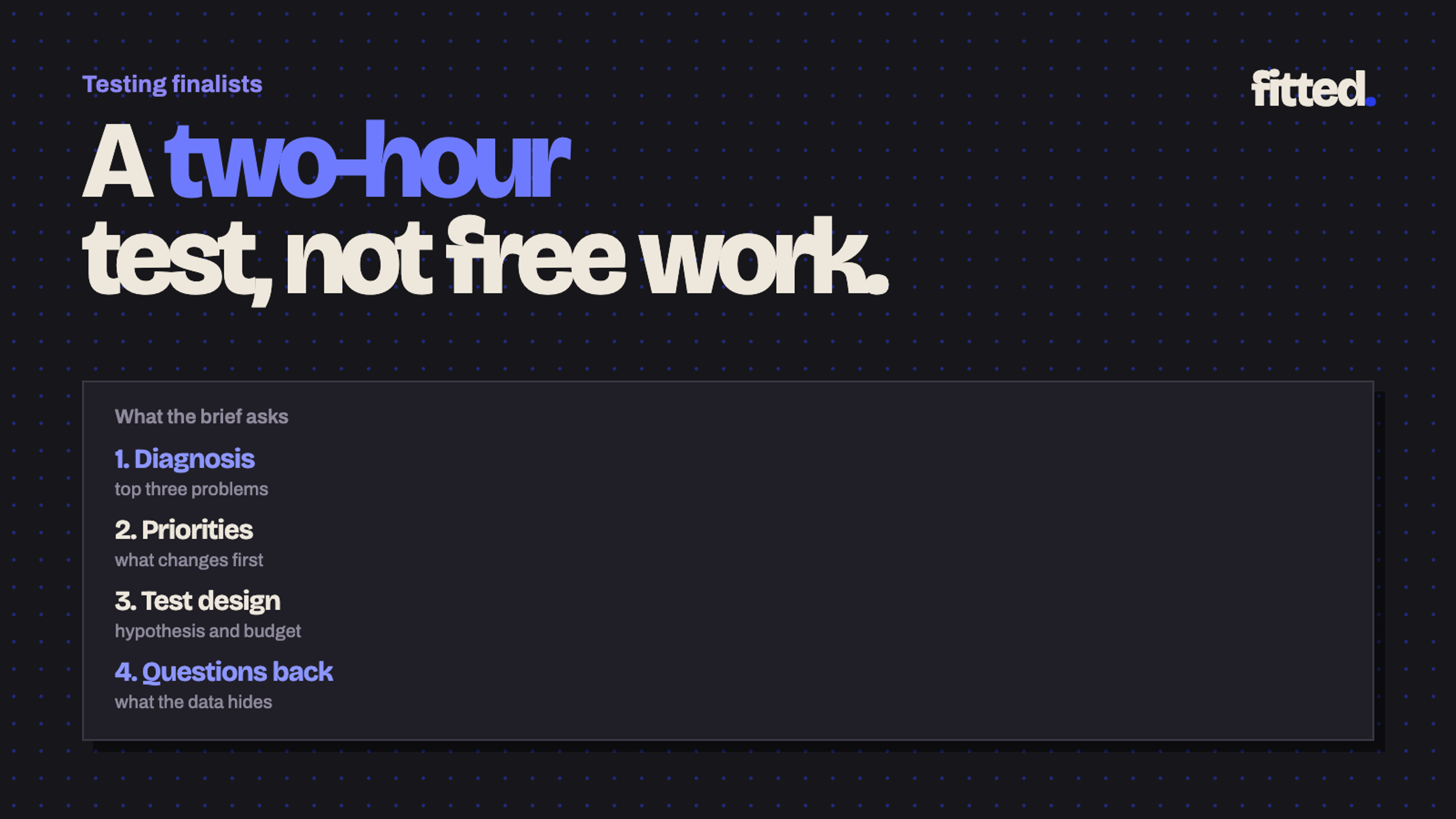
The paid media test assignment: how to run one candidates respect
A good test shows how a media buyer thinks in two hours. A bad one is free consulting. How to design a paid media test assignment that works.
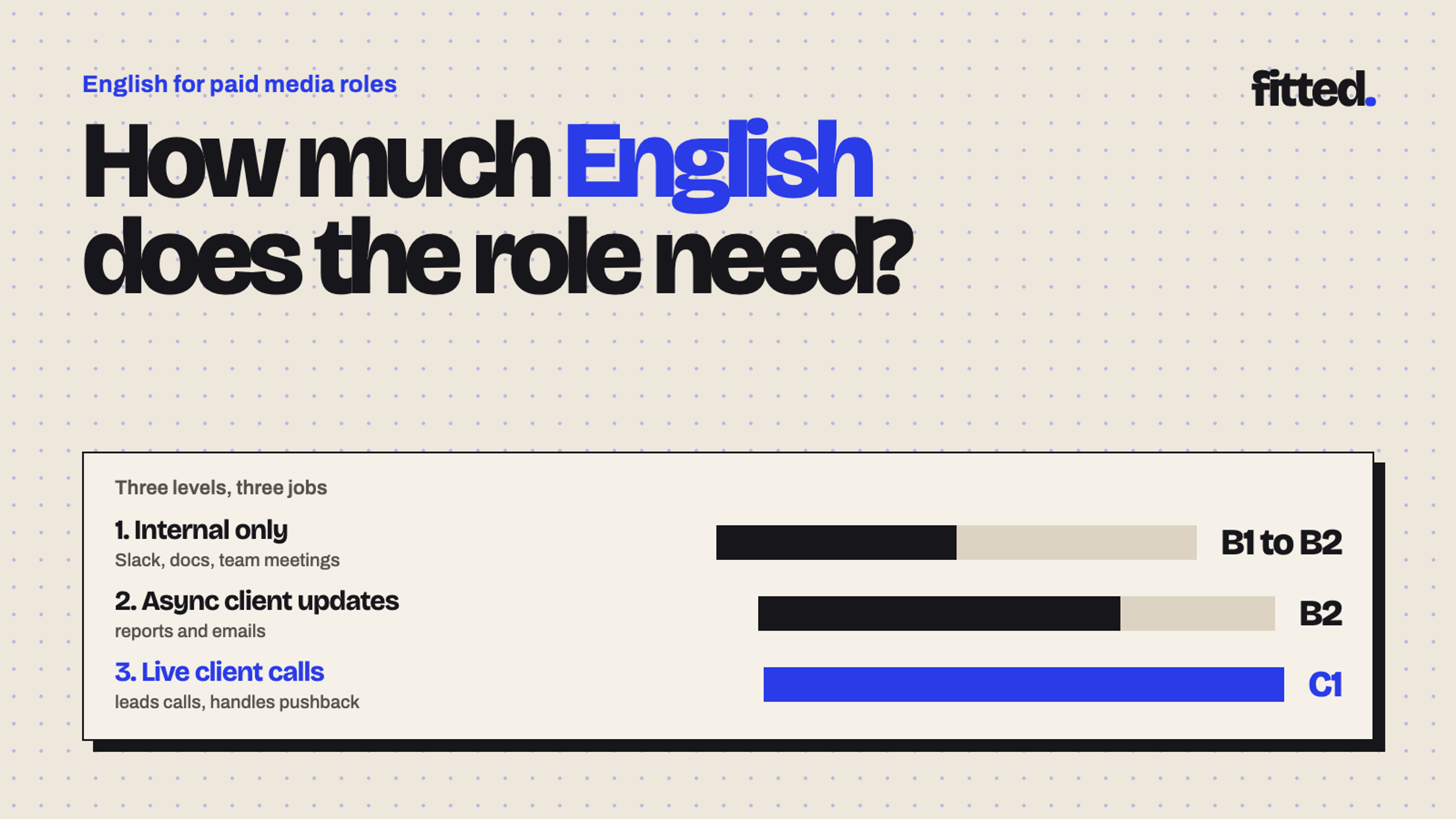
English level for remote marketing jobs: what a client-facing paid media role needs
Client calls and internal Slack need different levels of English. Most job posts don't say which. Here is how to define the level your role needs.
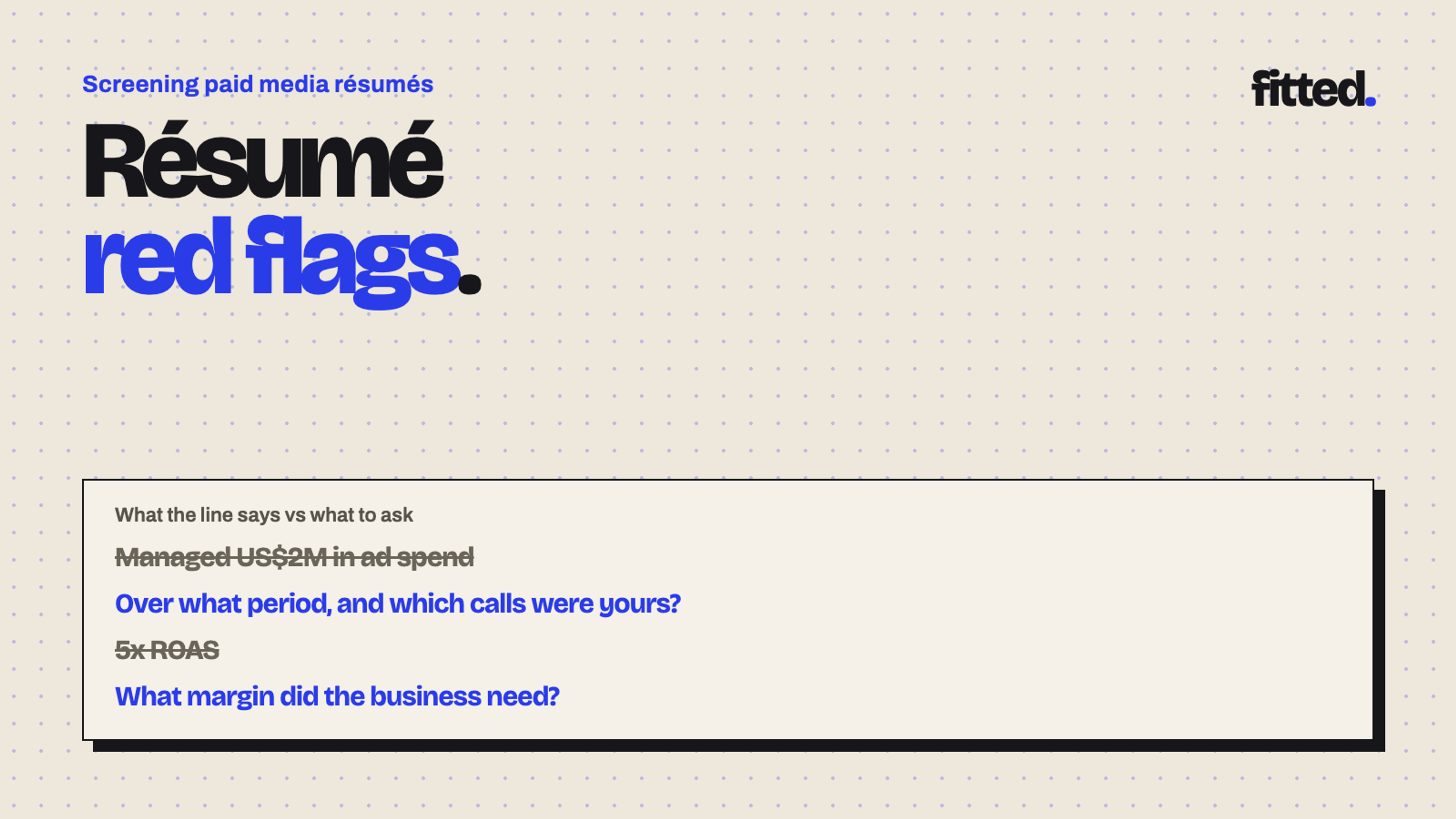
Paid media resume red flags: what to question before the interview
"Managed US$2M in ad spend" tells you nothing. Seven paid media resume red flags and the one question to ask about each.