Paid social vs paid search specialist: which hire do you actually need?
Most job posts ask for both. Most great candidates are strong in one. A decision guide by business model to pick the right specialist.
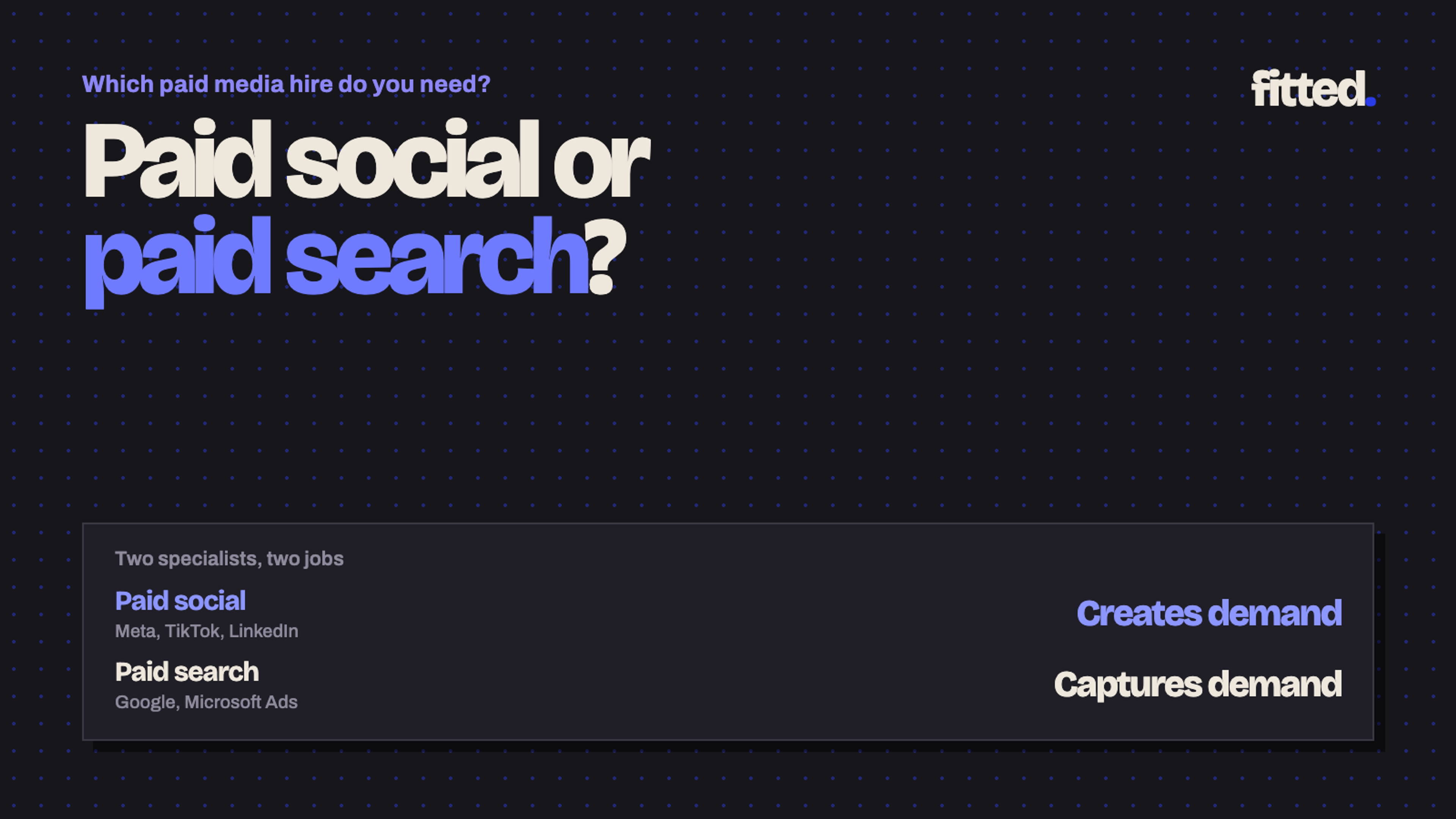
Most job posts ask for both. Most great candidates are strong in one. Choosing between a paid social vs paid search specialist comes down to where your demand comes from: paid social creates demand from people who are not looking yet, paid search captures demand from people who already are. Hire for the channel that drives most of your growth today, and treat the other as a bonus.
This guide explains the difference, shows which hire fits each business model and gives you a quick way to decide.
What is the difference between a paid social vs paid search specialist?
Paid search shows ads to people who are actively searching, mainly on Google and Microsoft Ads. The person already has the problem and is looking for an answer. The skill is matching intent: keywords, bids, landing pages and conversion tracking.
Paid social shows ads to people based on who they are and how they behave, on platforms like Meta, TikTok and LinkedIn. Most of them were not looking for you. The skill is creating demand: creative testing, audience strategy and reading early signals.
| Paid search | Paid social | |
|---|---|---|
| Demand | Captures existing intent | Creates new demand |
| Main platforms | Google Ads, Microsoft Ads | Meta, TikTok, LinkedIn |
| What drives results | Keywords, bids, landing pages | Creative, audiences, offers |
| Core skill | Structure and efficiency | Testing and creative judgment |
| Typical weekly work | Search terms, bids, Quality Score, tracking | New concepts, test reads, creative briefs |
Why is a "does both" hire risky?
A job post that asks for Google, Meta, TikTok, LinkedIn and analytics is asking for five jobs. Candidates who claim all of them are usually strong in one or two and familiar with the rest.
That is fine if you know which one is the strong one. The risk is hiring someone great at search for a business that grows on social, or the other way around, and finding out three months later.
Our interview questions make this visible fast. The question "Which channel would you bet your job on?" is in our list of paid media resume red flags for a reason.
Which specialist should you hire for your business model?
This is a fitted. decision guide, not a rule. Your own numbers should always win.
| Business model | Usually hire first | Why |
|---|---|---|
| DTC ecommerce | Paid social | Most new customers discover the brand in a feed, and creative testing drives growth |
| Lead generation (services, local, finance) | Paid search | Buyers search for the service when they need it, and intent converts |
| B2B SaaS | Depends on the market | Search if people already look for your category, LinkedIn and paid social if they do not yet |
| Marketplace or app | Paid social | Volume and creative testing at scale matter most |
| Agency | Your largest client mix | Hire for the channel most of your retainers depend on |
How do you tell which channel drives your growth?
Look at your last six months and answer three questions:
- Where do your best customers come from? Not the most leads, the ones that buy and stay.
- Do people search for what you sell? If your category has search volume, search is a real channel. If you are creating a new category, social will do more of the work.
- What limits growth today? If you run out of search volume, you need social to create more demand. If social leads are cheap but low quality, a search specialist may fix your efficiency.
If the answers point in different directions, hire for the channel with the bigger budget and the clearer problem.
What should you ask a paid search candidate?
Search interviews should go deep on structure and efficiency:
- How do you build account structure for a new account?
- How often do you review search terms, and what do you look for?
- How do you decide between manual and automated bidding?
- What do you check first when conversions drop overnight?
What should you ask a paid social candidate?
Social interviews should go deep on testing and creative:
- How many new creative concepts do you test in a month, and how do you choose them?
- How do you know a concept is winning before you have conversions?
- How do you write a creative brief from performance data?
- What do you do when the best ad starts to fatigue?
For the full interview structure, see how to interview a media buyer.
When does a generalist performance marketer make sense?
A generalist is the right hire when you are early, spend is modest across several channels and you need one person to set up tracking, run the first tests and tell you where to focus.
The trade-off is depth. As spend grows on one channel, you will usually want a specialist there and the generalist moving into a lead role.
Can one specialist grow into the other channel?
Often, yes, with time and the right support. The core skills overlap: testing discipline, reading results and connecting ads to the business.
What takes longer to learn is the instinct for the other channel. A search specialist moving into social has to get comfortable with creative work and noisier early signals. A social specialist moving into search has to learn account structure and keyword control.
If you hire a specialist today and expect them to cover the second channel later, say so in the interview. Ask what they have done on the other channel and how they would learn it. Then plan for a few months of ramp up, not a few weeks.
How do we match the specialty at fitted.?
When you brief a search with fitted., we ask about your business model, your channel mix and where growth comes from before we source anyone. The shortlist is built for that channel.
Every candidate is interviewed in English by a performance marketer about the channel they own, and the written scorecard says clearly which channel is their strength.
FAQ
What is the difference between a paid social and a paid search specialist?
A paid search specialist captures existing demand on Google and Microsoft Ads. A paid social specialist creates new demand on platforms like Meta, TikTok and LinkedIn through creative and audience testing.
Should I hire one person for both paid search and paid social?
Only if spend is modest and you need a generalist to set things up. As spend grows, hire a specialist for the channel that drives most of your growth.
Which channel should a DTC brand hire for first?
Usually paid social, because most new customers discover DTC brands in their feeds and creative testing drives growth. Check your own customer data first.
Which channel should a lead generation business hire for first?
Usually paid search, because buyers search for the service when they need it. Confirm by looking at where your best customers came from.
Josemar Mendes. Performance marketer who has worked for UK and US companies. Runs every technical and English interview at fitted. Published .
Related posts
English level for remote marketing jobs: what a client-facing paid media role needs
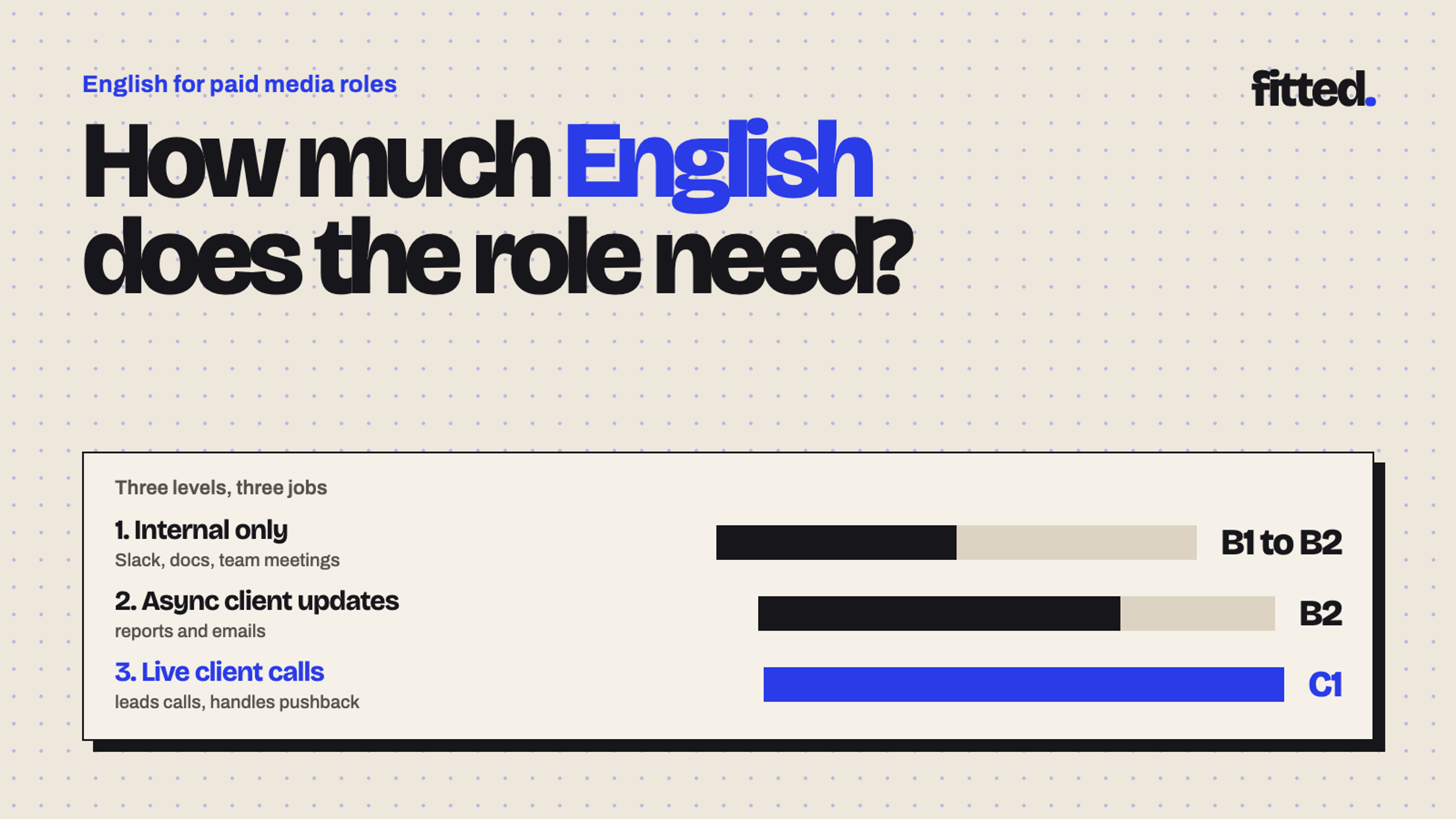
Client calls and internal Slack need different levels of English. Most job posts don't say which. Here is how to define the level your role needs.
The paid media test assignment: how to run one candidates respect
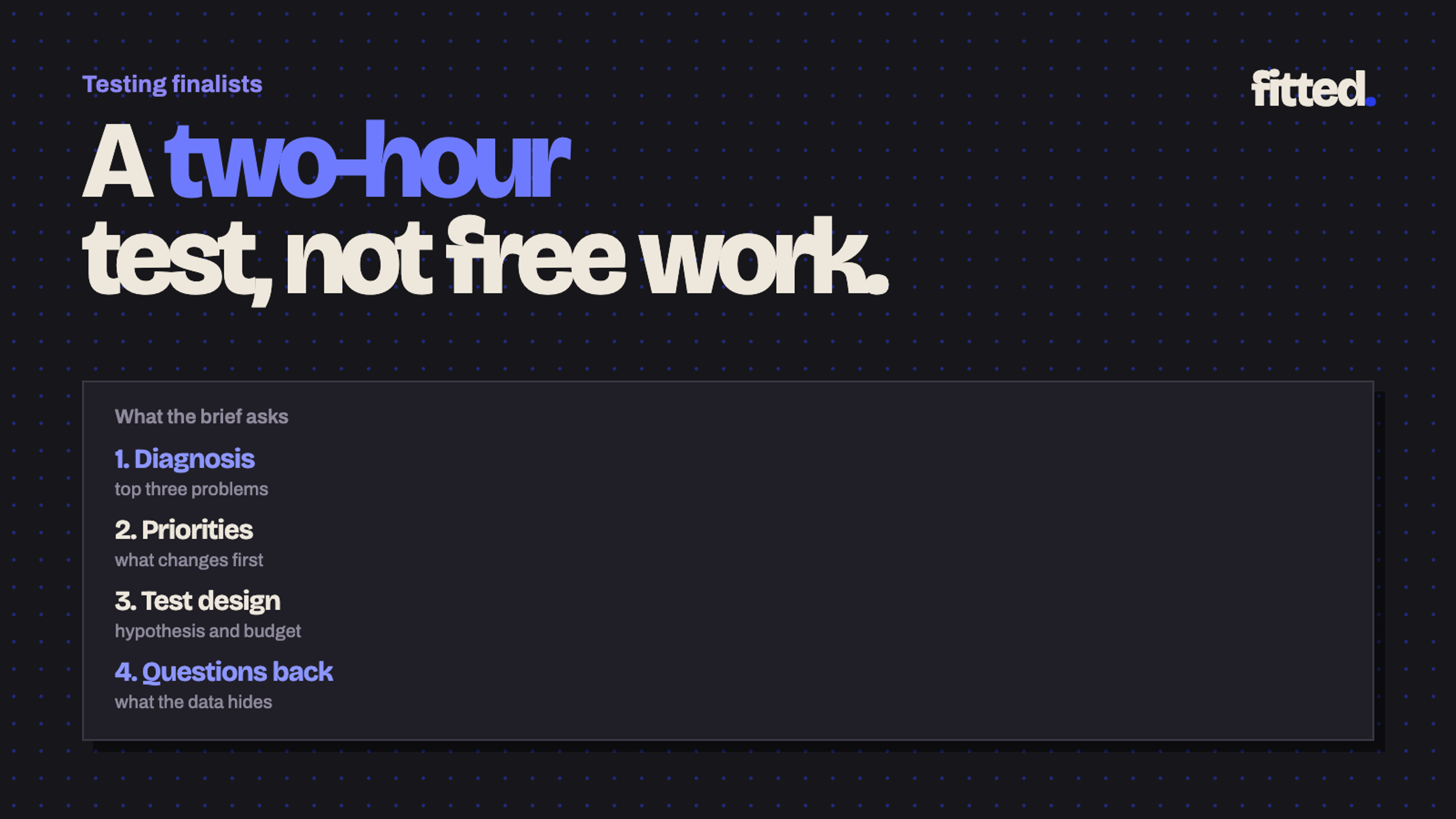
A good test shows how a media buyer thinks in two hours. A bad one is free consulting. How to design a paid media test assignment that works.
How to write a media buyer job description that attracts senior candidates
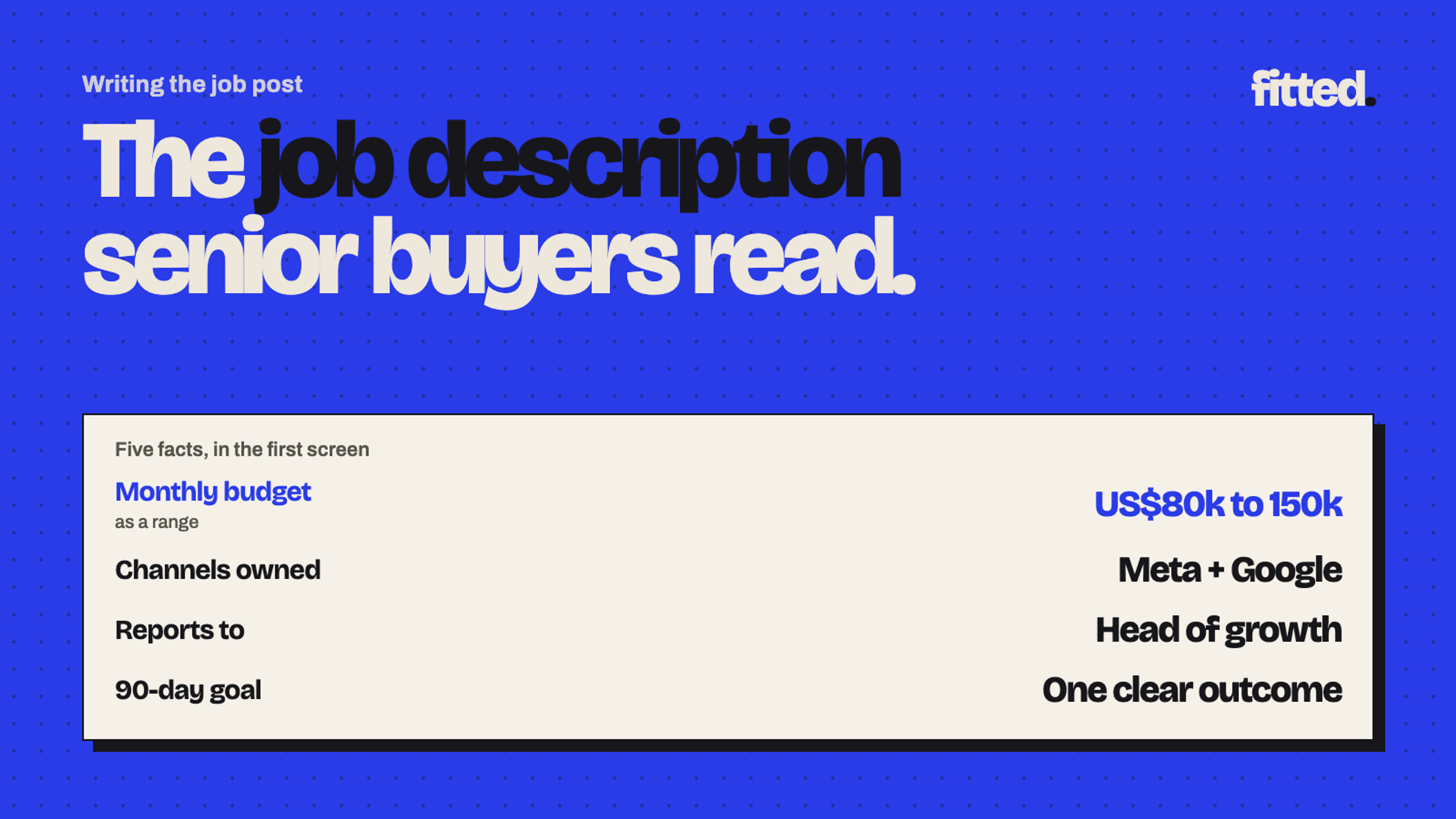
Most media buyer job descriptions list tools and skip the job. A template that tells senior candidates what they will own, spend and decide.