Paid media resume red flags: what to question before the interview
"Managed US$2M in ad spend" tells you nothing. Seven paid media resume red flags and the one question to ask about each.
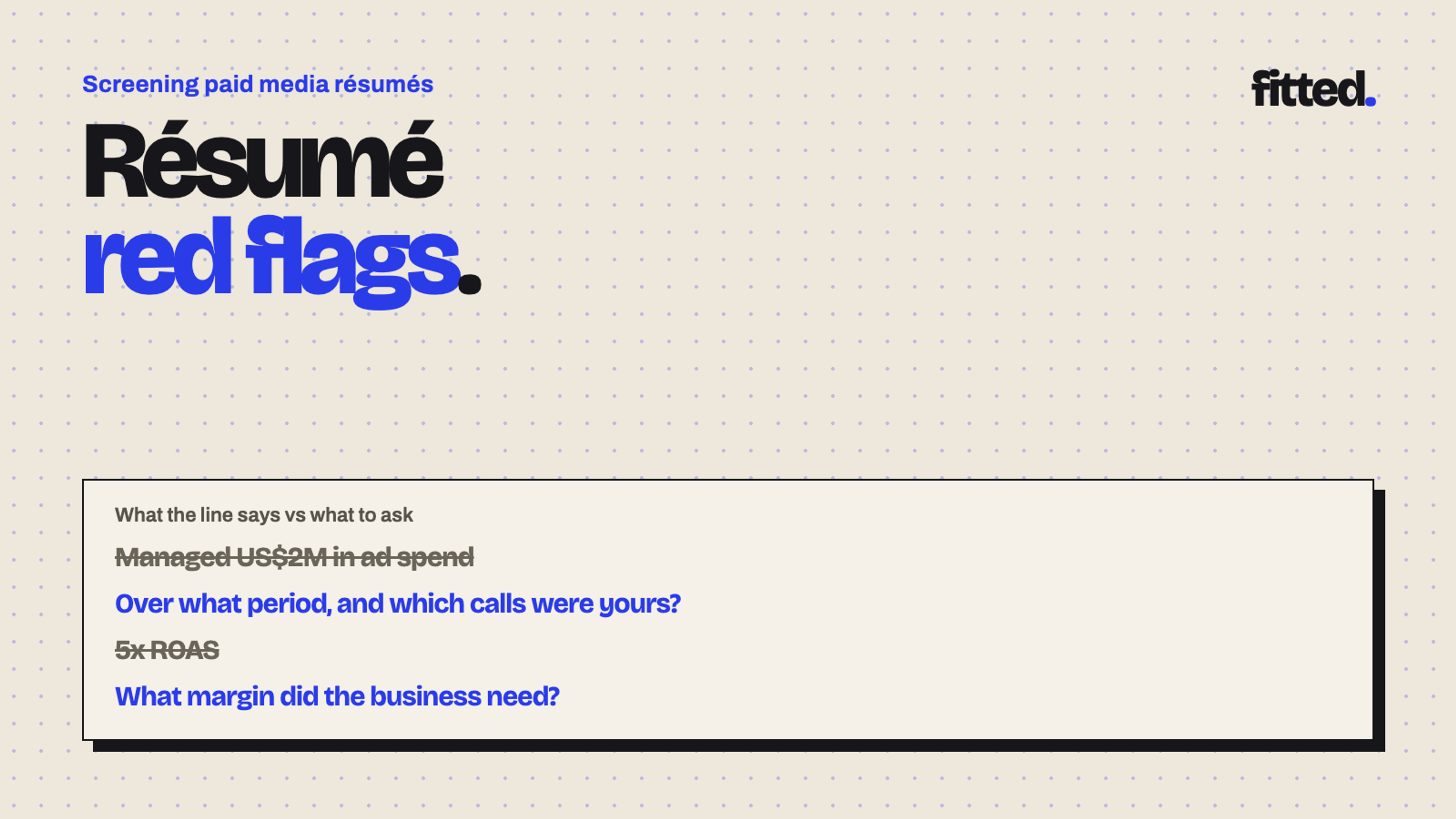
"Managed US$2M in ad spend" tells you nothing. Here's what to ask next. The biggest paid media resume red flags are vague ad spend, ROAS with no business context, no mention of mistakes and tool lists without results. None of them disqualify a candidate on their own, but each one needs a specific follow-up question.
This guide covers the seven red flags we see most often when reviewing media buyer résumés, and the question that tells you what is really behind each one.
Why do paid media résumés hide so much?
Because the numbers sound precise and usually are not. A résumé line can be completely true and still tell you almost nothing about the person.
"Managed US$2M" can mean the candidate set the strategy for a US$2M account. It can also mean they uploaded ads to a small part of it while someone else made every decision.
That is why résumé screening for paid media works best as a list of questions to ask, not a list of candidates to reject.
What are the most common paid media resume red flags?
| Red flag on the résumé | Why it matters | Question to ask |
|---|---|---|
| Vague ad spend ("managed US$2M") | No time frame, no role, no account count | "Over what period, across how many accounts, and which decisions were yours?" |
| ROAS with no context ("5x ROAS") | ROAS means little without margin and goal | "What margin did the business have, and what ROAS did it need to make money?" |
| No mistakes, only wins | Everyone who runs real money has losses | "Tell me about a decision that lost money and what you changed after." |
| Tool list with no results | Knowing a tool is not using it well | "Pick one tool. What did it help you decide?" |
| Every number is a percentage | "+300%" from a tiny base is easy | "What were the starting and ending numbers?" |
| Channels listed, none owned | Breadth can hide lack of depth | "Which channel would you bet your job on?" |
| Short stints with no story | Could be contracts, could be problems | "What was the scope of each role and why did it end?" |
Why is "managed US$2M in ad spend" a red flag?
Not because it is false. Because it is incomplete.
Ad spend is a total over some period of time. US$2M over three years across ten clients is a very different job from US$2M a quarter on one account. The line on the résumé does not say which.
The follow-up question fixes it in thirty seconds: over what period, across how many accounts, and which decisions were yours. A strong candidate answers without hesitating and usually adds detail you did not ask for.
Why should you question ROAS without context?
A 5x ROAS sounds great. Whether it is great depends on the business.
A brand with thin margins can lose money at 5x. A brand with high margins can grow profitably at 2x. Without the margin and the goal, ROAS is just a number from a dashboard.
Ask what margin the business had and what ROAS it needed to break even. Senior candidates know. We go deeper on this in our scorecard post, under commercial sense.
What does it mean when a résumé has no mistakes?
Résumés are marketing, so some polish is normal. But in interviews, a candidate who cannot name a single decision that went wrong is either very junior or not being straight with you.
Good media buyers have a ready answer. They paused a campaign too late. They trusted a tracking setup that was broken. They scaled too fast and watched costs jump. What matters is how quickly they noticed and what they changed.
This is question 4 in our list of media buyer interview questions.
Is a long tools list a red flag?
On its own, no. Most media buyers use a lot of tools. The problem is a tools section with no results anywhere else on the page.
A list of ten platforms and five analytics tools tells you what the candidate has logged into. It does not tell you what they did with them.
Pick one tool from the list and ask what it helped them decide. "We used GA4 to find that a landing page change killed mobile conversion, so we rolled it back" is an answer. "We used GA4 for reporting" is not.
What résumé signals are actually green flags?
Some lines are worth more than they look:
- A starting and ending number for a metric, not just a percentage.
- The business model named, such as subscription, lead generation or ecommerce.
- A test described in one line, with what was tested and what changed.
- A clear personal role, like "owned paid social for three DTC brands".
- A lost-money story, which is rare on a résumé and very good to see.
How should you handle a résumé with several red flags?
One red flag is a question. Several on the same résumé is a pattern, but it is still not an automatic no.
Sort them first. Vague numbers and a long tools list are common and easy to clear in a five minute call. No business context anywhere, and no personal role on any account, are more serious, because they suggest the candidate has mostly executed other people's plans.
Then decide what the role needs. For a junior or execution role, a résumé heavy on tools and light on decisions can be fine. For a senior hire who will own spend, you need at least one account where the candidate clearly made the calls.
If you are unsure, run a short first screen with two questions: "Which account on this résumé was most yours?" and "What was the business result, not the ad result?" Clear answers move the candidate forward. Vague ones usually confirm what the résumé suggested.
How do we screen résumés at fitted.?
We treat the résumé as a starting point. Every red flag becomes a question in the first screen, and only candidates who answer them clearly reach the English interview with a performance marketer.
By the time a candidate is on your shortlist, those questions have been asked and answered, and the answers are in the written scorecard you receive.
FAQ
What are the biggest red flags on a media buyer résumé?
Vague ad spend with no time frame or role, ROAS with no business context, no mention of mistakes, tool lists with no results and percentages with no starting numbers.
Should I reject a candidate for vague ad spend numbers?
No. Ask over what period, across how many accounts and which decisions were theirs. Strong candidates answer clearly in seconds.
Is a high ROAS on a résumé a good sign?
Only with context. Ask what margin the business had and what ROAS it needed to break even. A high ROAS can still lose money.
What should a good paid media résumé include?
The business model, starting and ending numbers, the candidate's personal role and at least one specific test or decision.
Josemar Mendes. Performance marketer who has worked for UK and US companies. Runs every technical and English interview at fitted. Published .
Related posts
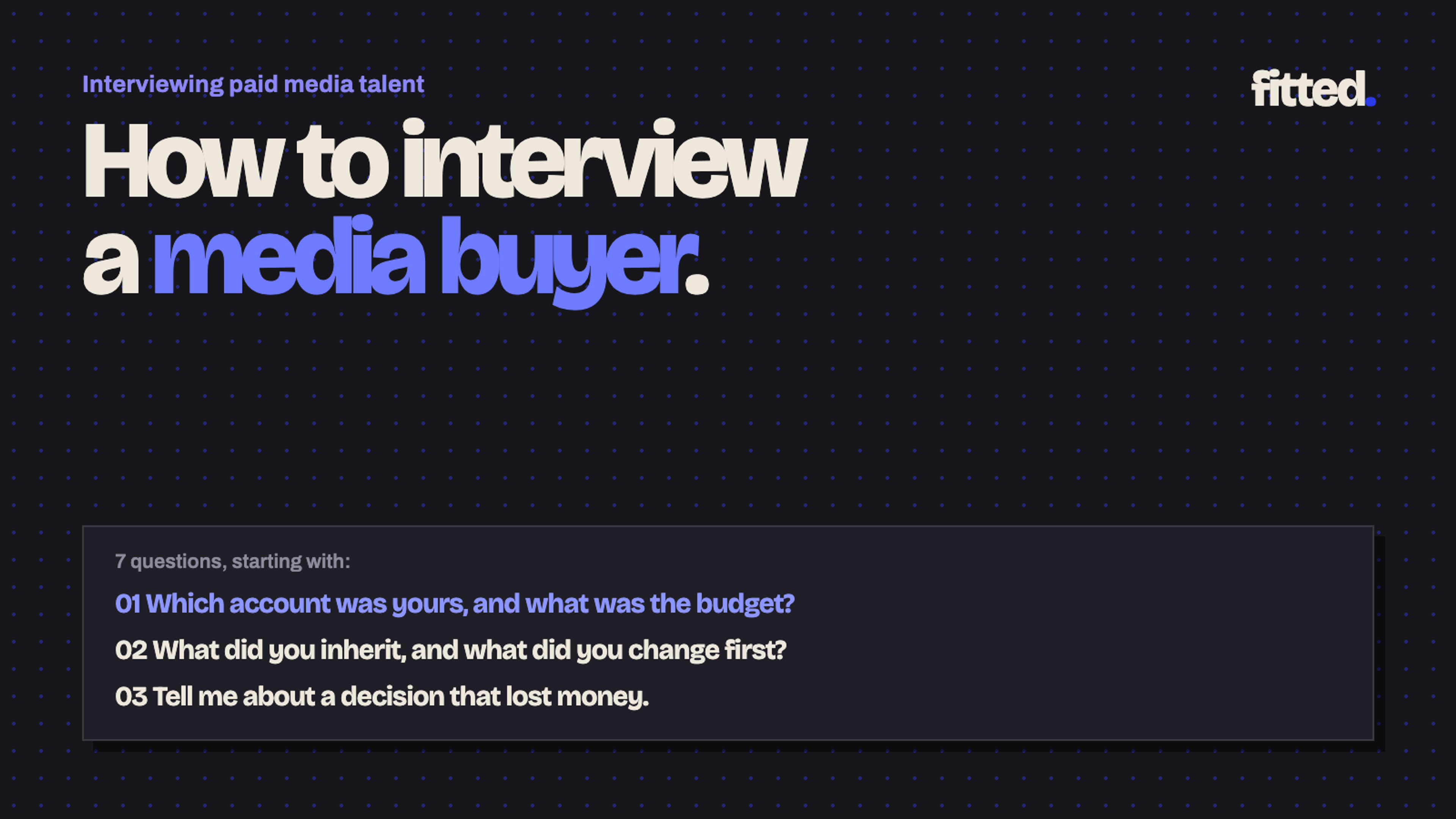
How to interview a media buyer when you are not one
Seven interview questions that show whether a media buyer actually ran the accounts on their résumé, with what a strong answer sounds like.
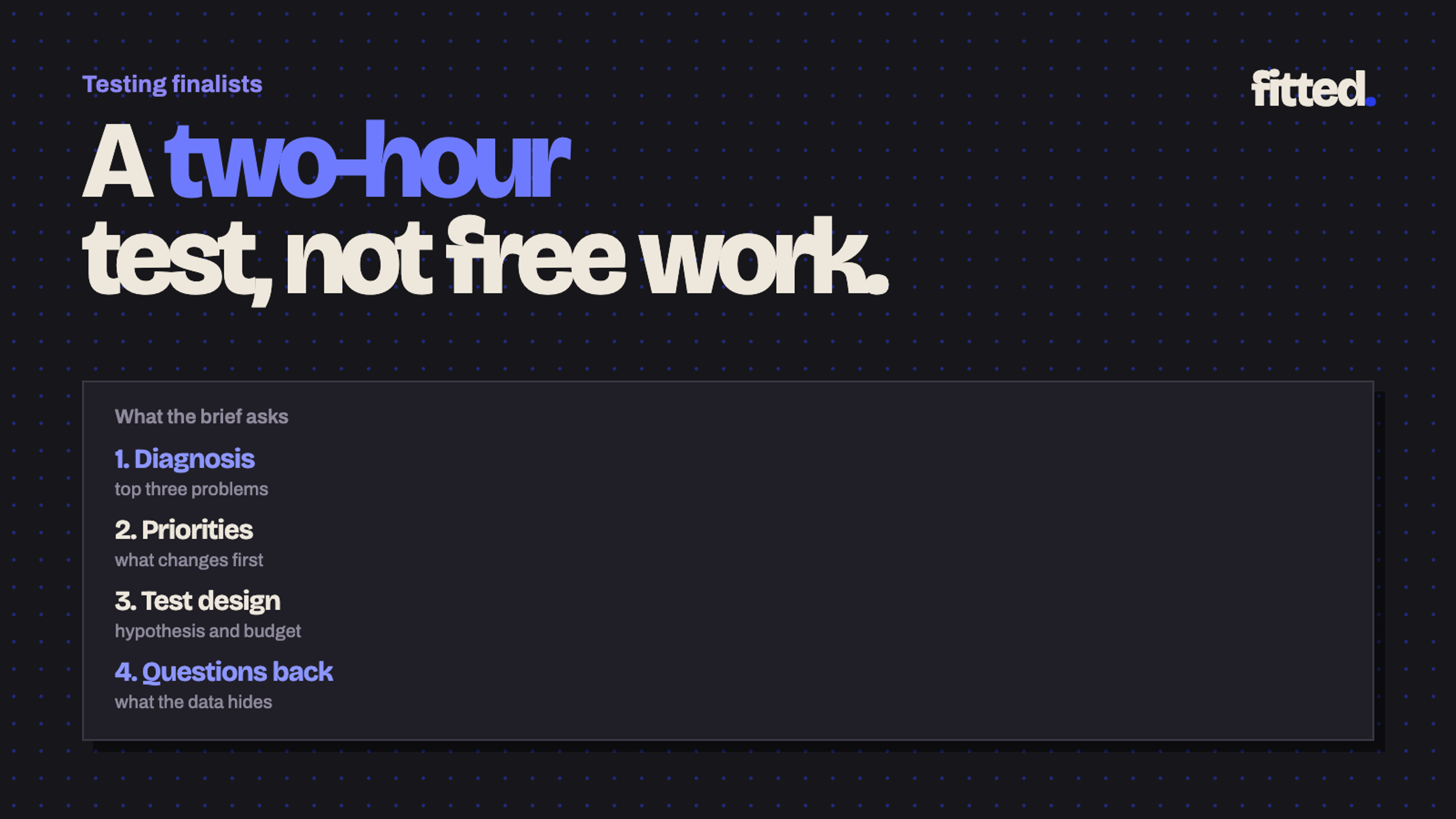
The paid media test assignment: how to run one candidates respect
A good test shows how a media buyer thinks in two hours. A bad one is free consulting. How to design a paid media test assignment that works.
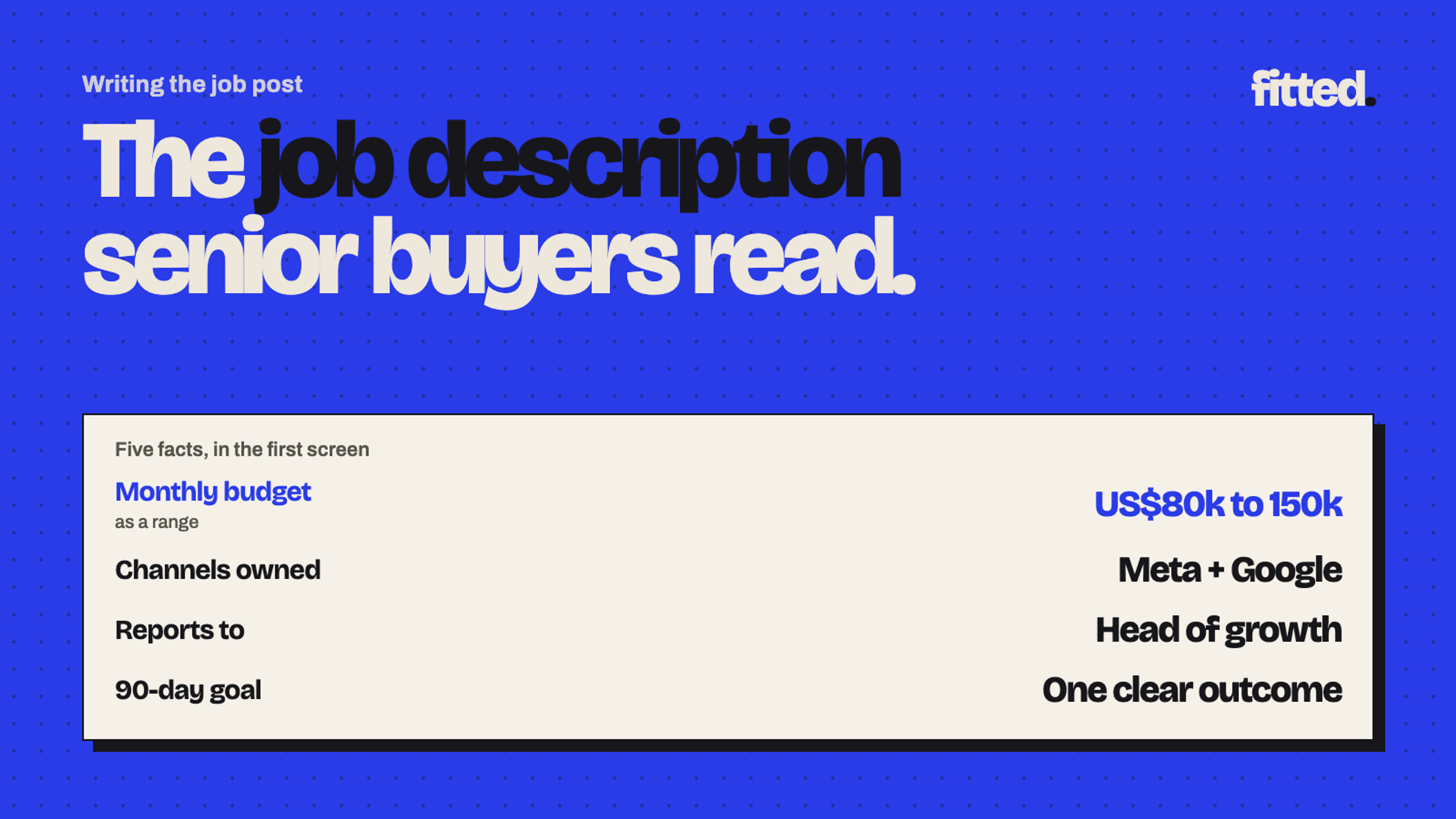
How to write a media buyer job description that attracts senior candidates
Most media buyer job descriptions list tools and skip the job. A template that tells senior candidates what they will own, spend and decide.