Reference check questions for marketing hires that get honest answers
Most reference calls end with "great to work with". Eight reference check questions for marketing hires that get you something you can use.
Most reference calls end with "great to work with" and very little else. The best reference check questions for marketing hires ask for comparisons, specific examples and the limits of the person's skills, because those are things a reference can answer honestly without feeling disloyal. Ask about the work, not the personality.
As a psychologist and recruiter, I find reference calls are one of the most underused steps in hiring. Here is how we run them and the questions that work.
Why do most reference checks tell you nothing?
Because the questions invite praise. "Was she a good team member?" has only one polite answer. References are usually chosen by the candidate, they like the candidate, and many have been told by their own company not to say anything negative.
None of that makes references useless. It means you need questions where an honest answer does not feel like a betrayal. Asking someone to rank, compare or describe a limit gives them room to be truthful while still being kind.
Who should you call for a marketing reference?
The most useful reference is someone who saw the person's work up close and had a stake in the results.
| Reference | What they can tell you | How much weight to give it |
|---|---|---|
| Direct manager | Ownership, reliability, judgment under pressure | High |
| Client (for agency roles) | Communication, how they handled bad weeks | High |
| Peer on the same account | Collaboration, how decisions were really made | Medium |
| Someone they managed | Leadership and feedback style | Medium, for senior roles |
| Friend or former classmate | Character, not work | Low |
For a media buyer, ask specifically for someone who saw them manage a budget. A manager from three jobs ago who never looked at the ad account knows less than a current client.
What are the best reference check questions for marketing hires?
These eight work for most paid media and performance marketing roles. You will not need all of them in every call.
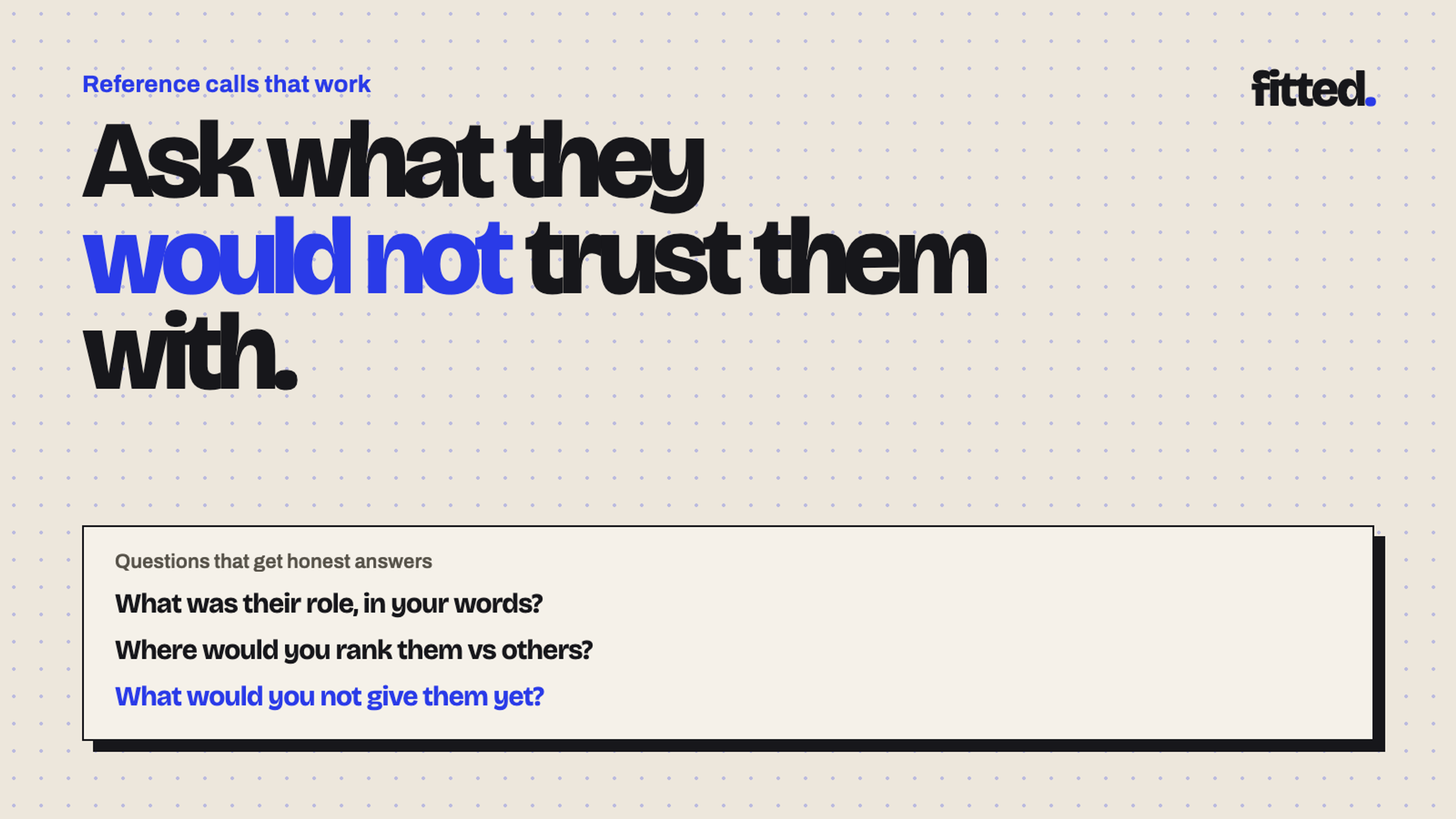
- "What was their role on the account, in your words?" Compare this with what the candidate told you.
- "What decisions did they make on their own, and which ones went through you?" This shows real ownership.
- "Can you tell me about a week when results were bad? What did they do?"
- "Compared with other people you have managed in this role, where would you place them?" Top 10%, top quarter, about average.
- "What would you not give them responsibility for yet?" This is the question that gets the most honest answers.
- "How did they communicate results, especially bad ones?"
- "What kind of manager or setup gets the best out of them?"
- "Would you hire them again for the same role? Why?"
Question 5 works because it assumes everyone has limits, which is true. Most references will answer it thoughtfully.
How do you read what a reference does not say?
Listen for gaps more than for red flags. Clear warning signs are rare. Missing detail is common.
A few patterns are worth noticing:
- Praise only for personality. "Lovely person, everyone liked her" with no mention of results can mean the results were not memorable.
- Hesitation on the comparison question. A long pause before "above average" often means average.
- A different story about their role. If the candidate said they owned the account and the reference describes them as support, ask the candidate about it.
- Enthusiasm about rehiring. A quick, specific yes to question 8 is one of the strongest positive signals you can get.
One lukewarm reference is not a reason to reject someone. Two references describing the same limit is a pattern worth discussing with the candidate.
When should you run reference checks?
At the end, for your final one or two candidates. Calling references for everyone wastes their time and yours, and some candidates do not want their current employer to know they are looking.
Always ask the candidate first. Tell them who you plan to call and why. A candidate who cannot name a single person who saw their work is a concern in itself, though for very early career people it can just mean they have not had many jobs yet.
How long should a reference call take?
Fifteen to twenty minutes. Book it as a short call, not an email. Written references are almost always more careful and less useful.
Start by explaining the role in two sentences, so the reference can judge fit. Then ask your questions, take notes and thank them. If they are open, a final "is there anything I should have asked?" sometimes brings out the most useful point of the call.
Do reference checks work for candidates in Latin America?
Yes, with two adjustments. First, many references will be more comfortable in Spanish or Portuguese, so offer that if you can. Second, for contractors who worked with several clients, a client reference is usually more useful than a manager reference.
The questions stay the same. People everywhere answer more honestly when you ask about limits and comparisons instead of asking for a rating.
For the rest of the evaluation, our paid media candidate scorecard covers what to score before references, and our guide to English level for remote marketing jobs explains how to judge communication.
Where references fit with a fitted. shortlist
Every candidate on a fitted. shortlist has already been interviewed in English about their own accounts, and the written scorecard explains each score. References are the step that comes after: your chance to hear from someone who saw that work firsthand.
Use the scorecard to choose your questions. If it flags a limit, ask the reference about that limit directly. If it highlights a strength, ask for an example that confirms it.
FAQ
What should I ask in a reference check for a marketing hire?
Ask about their exact role, which decisions they made alone, how they handled a bad week, how they compare with others in the same role and what you would not give them responsibility for yet.
How many references should I check?
Two is usually enough, as long as at least one saw the candidate manage a budget or a client directly.
When should reference checks happen?
At the end of the process, for your final one or two candidates, and always with the candidate's permission.
Are written references useful?
Less than calls. Written references tend to be careful and general. A 15 minute call gets more specific answers.
Isadora Teodoro. Psychologist and recruiter with in-house and freelance HR experience. Runs talent mapping, screening and behavioral assessments at fitted. Published .
Related posts
English level for remote marketing jobs: what a client-facing paid media role needs
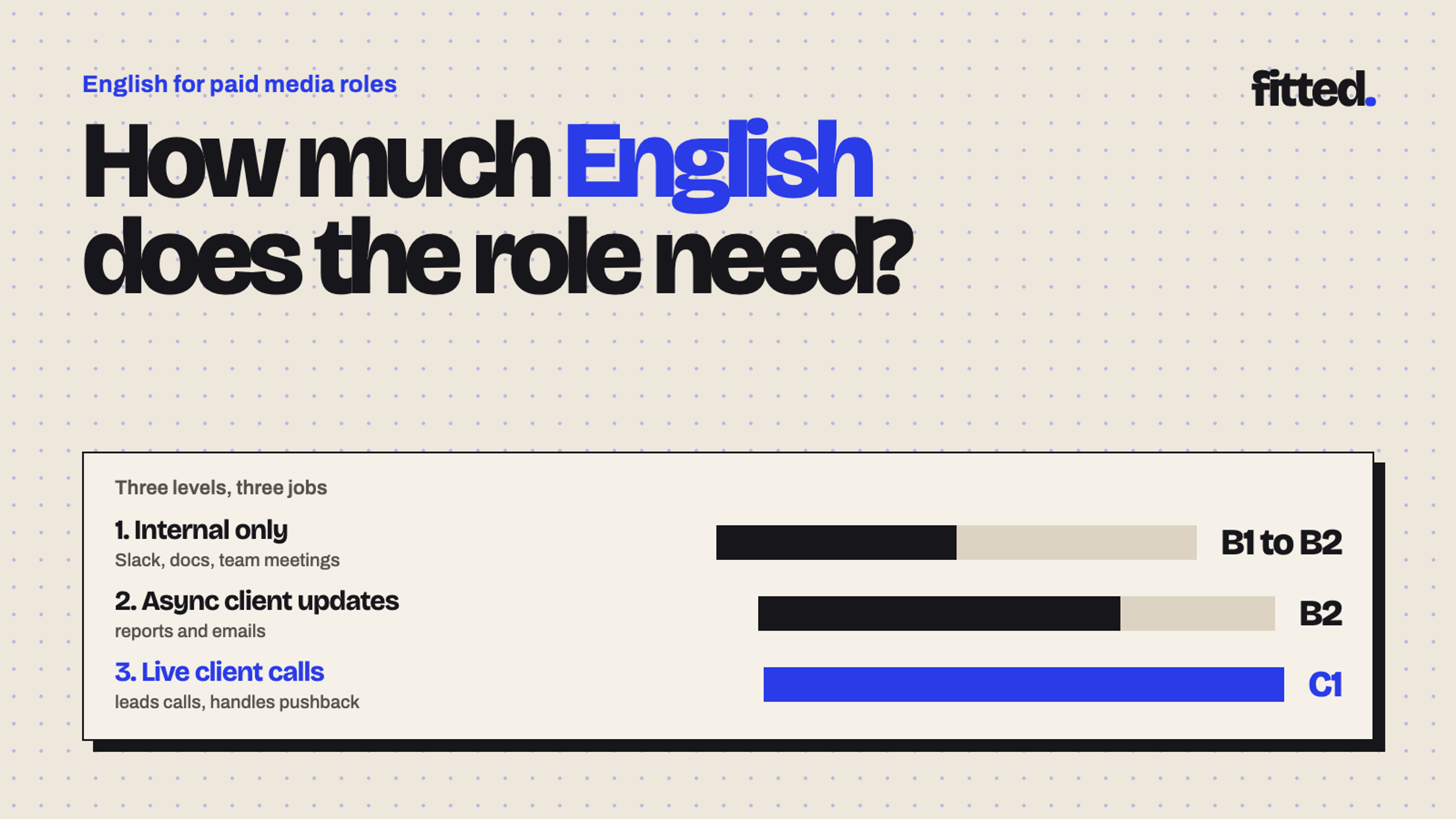
Client calls and internal Slack need different levels of English. Most job posts don't say which. Here is how to define the level your role needs.
Behavioral interview questions for remote marketers, from a psychologist
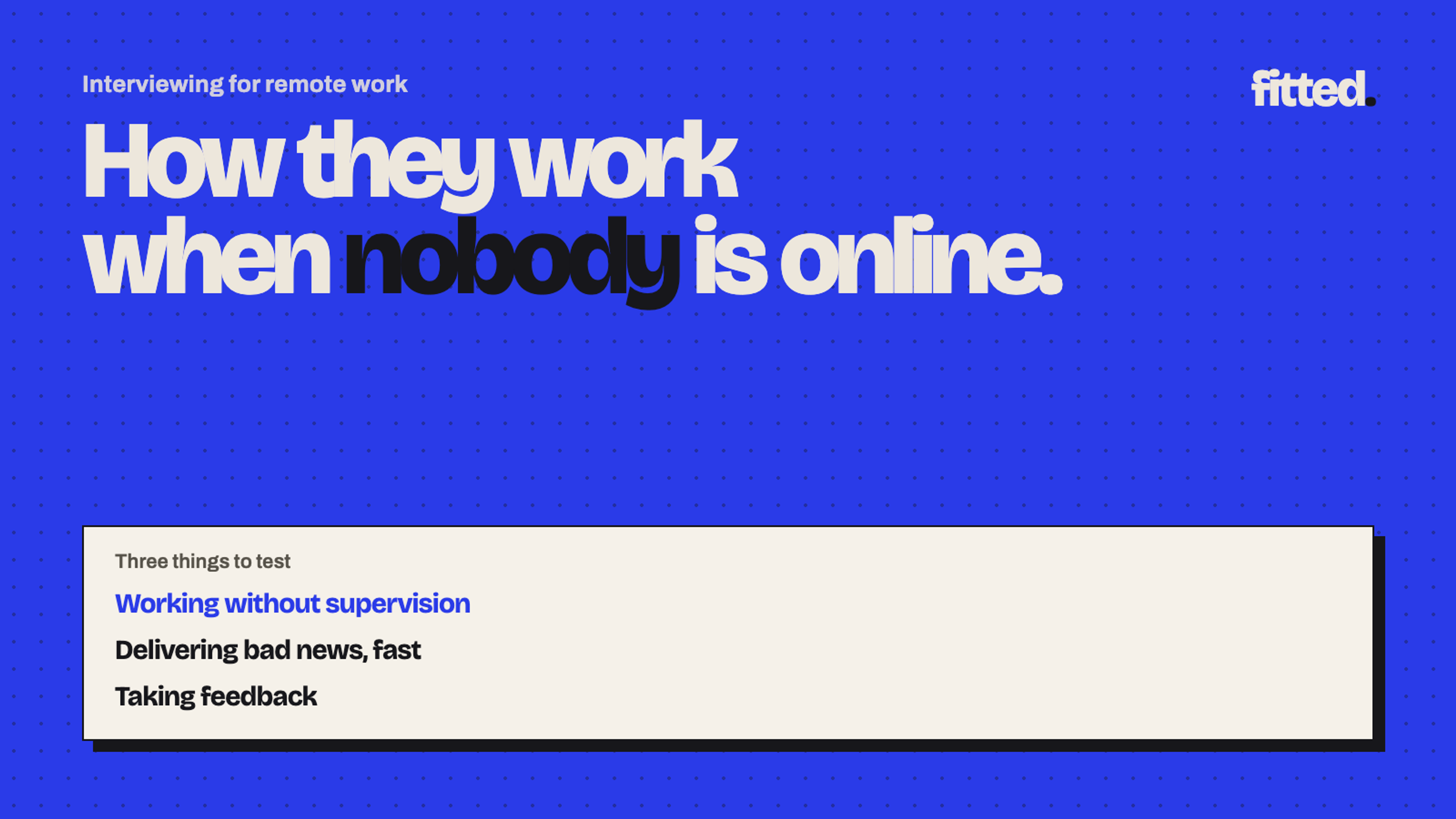
Technical skill gets a media buyer hired. Behavior decides whether they last in a remote team. Nine questions that show both.

How to write a media buyer job description that attracts senior candidates
Most media buyer job descriptions list tools and skip the job. A template that tells senior candidates what they will own, spend and decide.