How to evaluate a performance marketer: why ROAS alone is a bad hiring signal
A 6x ROAS on a brand with 70% margins and a 6x ROAS on one with 20% are not the same skill. How to evaluate a performance marketer beyond ROAS.
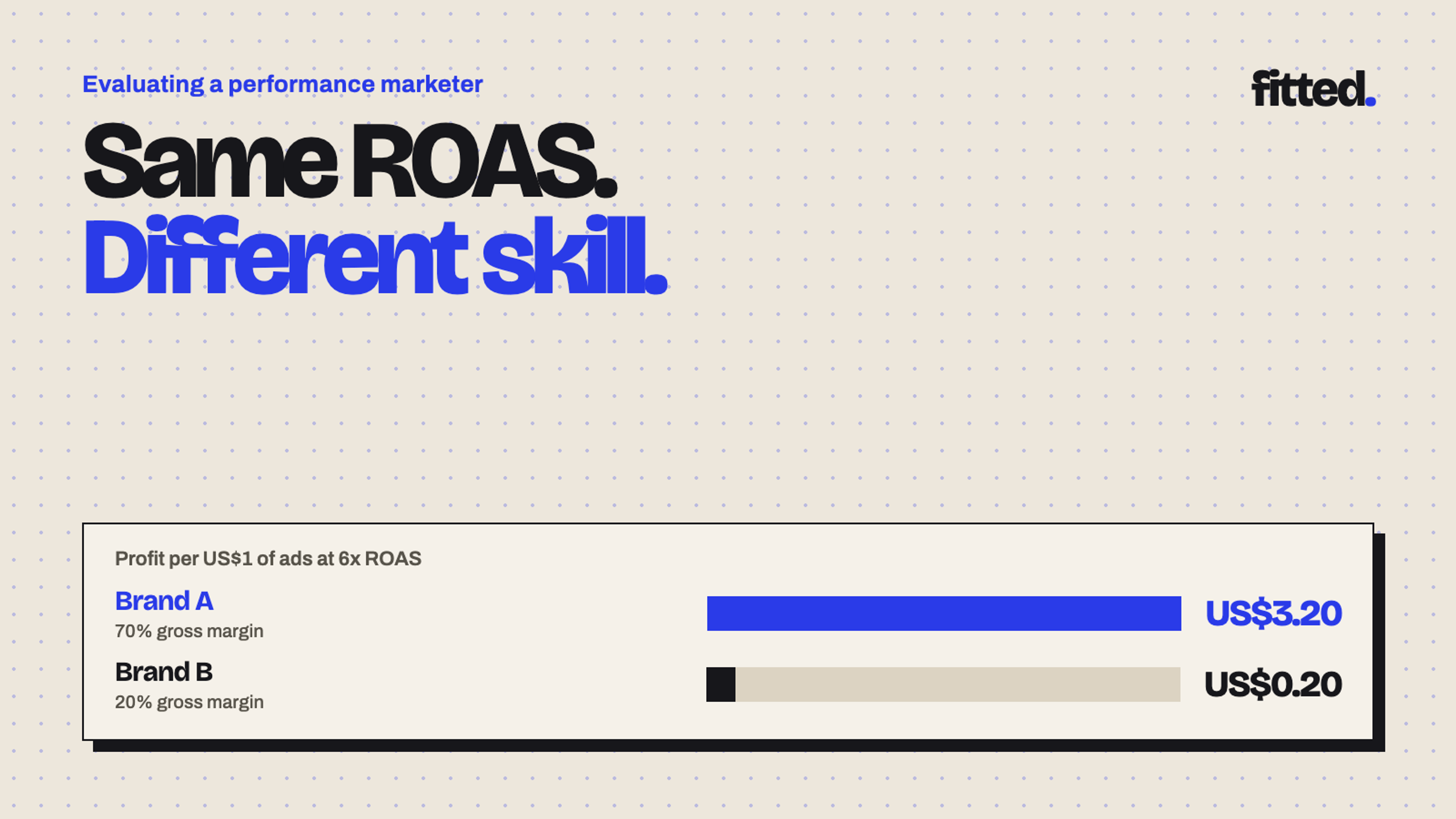
A 6x ROAS on a brand with 70% margins and a 6x ROAS on one with 20% are not the same skill. To evaluate a performance marketer, look past ROAS to the business behind it: margin, customer acquisition cost, payback and whether the ads created sales that would not have happened anyway. A candidate who talks about those without being asked is usually the stronger hire.
This article shows the math behind that claim, the three signals that matter more than ROAS, and the interview questions that reveal them.
Why is ROAS alone a bad hiring signal?
ROAS, return on ad spend, is revenue divided by ad spend. It tells you how much revenue came back for every dollar spent. It does not tell you whether that revenue made money.
That depends on margin. A business that keeps 70 cents of every dollar of revenue can be very profitable at a low ROAS. A business that keeps 20 cents can lose money at a ROAS that looks great on a résumé.
So when a candidate leads with "I ran a 6x ROAS", the honest answer is: it depends.
What does the same ROAS look like at different margins?
Here is the math for one dollar of ad spend at 6x ROAS. The numbers are illustrative, not from a real account, and they leave out other costs such as shipping and payment fees to keep it simple.
| Brand A | Brand B | |
|---|---|---|
| ROAS | 6x | 6x |
| Revenue per US$1 of ads | US$6.00 | US$6.00 |
| Gross margin | 70% | 20% |
| Gross profit | US$4.20 | US$1.20 |
| Minus the US$1 ad cost | US$3.20 | US$0.20 |
| Break-even ROAS (1 ÷ margin) | about 1.4x | 5x |
Brand A is very profitable at 6x and could scale far below it. Brand B barely breaks even at 6x and would lose money at 4x.
A media buyer who hit 6x for Brand B did harder work, under tighter limits. A media buyer who hit 6x for Brand A may have left growth on the table by not spending more.
What should you look at instead of ROAS?
Three signals tell you far more about commercial sense:
- Margin awareness. Do they know the margin of the business they ran, and the ROAS it needed to break even?
- CAC and payback. For subscription, lead gen and SaaS, do they talk about customer acquisition cost and how long it takes to earn it back?
- Incrementality. Do they ask whether ads created new sales, or just took credit for people who would have bought anyway, such as returning customers searching for the brand name?
None of these need advanced statistics. They need a candidate who thinks about the business, not the dashboard.
How do you test commercial sense in an interview?
Use these questions. You do not need to be technical to judge the answers.
- "What margin did that business have, and what ROAS did it need to make money?"
- "Tell me about a time a good ROAS was hiding a bad result."
- "How did you know the ads were creating sales, not just claiming them?"
- "If I cut your budget in half tomorrow, what would you keep and why?"
Strong answers mention specific numbers and trade-offs. Weak answers stay inside platform metrics: ROAS, CTR, CPM and nothing about the business.
These questions build on the ones in how to interview a media buyer, especially question 6, about which number the business really cared about.
How to evaluate a performance marketer with a short practical exercise?
For your final two or three candidates, a short case beats another interview. Keep it small: thirty minutes of thinking, not a weekend of free work.
Give them a simple, made-up account summary: monthly spend, revenue, ROAS, gross margin and one month where results dropped. Then ask three questions:
- Is this account making money? They should do the margin math before anything else.
- What would you check first about the drop? Tracking, spend mix, creative and seasonality are all good starts.
- Would you spend more or less next month, and why? There is no single right answer. You want a clear argument.
Read the answers for the order of their thinking. Strong candidates start with whether the business is profitable, then look for causes, then make a call. Weaker ones jump straight to campaign tweaks.
Share your own view afterwards. How a candidate reacts to disagreement is part of the test too.
Why do so many résumés lead with ROAS?
Because it is easy to quote and sounds impressive. It is also the number most platforms put at the top of the dashboard.
That is why "5x ROAS" with no context is one of the paid media resume red flags we always follow up on. It is not a reason to reject someone. It is a reason to ask about margin.
Does this matter for agency hires too?
Yes, and often more. Agency media buyers move between clients with very different margins. One who uses the same ROAS target for every client will overspend on some and underspend on others.
When you evaluate a candidate for an agency role, ask how they set targets for two very different clients. The answer shows whether they adapt to the business or copy one playbook. If you are deciding when to make that hire, see when to hire a media buyer for your agency.
How do we score commercial sense at fitted.?
Commercial sense is one of the five points on our paid media candidate scorecard, next to accounts they ran, technical depth, spoken English, and salary and hours.
Every candidate is interviewed in English by a performance marketer, and we ask about margin on every account they describe. A candidate who reads the business behind the numbers scores high. One who only reports ROAS does not make the shortlist for senior roles.
FAQ
Is ROAS a good way to evaluate a performance marketer?
Not on its own. The same ROAS can be very profitable or loss-making depending on the business margin. Ask about margin, CAC, payback and incrementality.
What is a good ROAS?
It depends on margin. A rough break-even point is 1 divided by the gross margin, so about 1.4x at 70% margin and 5x at 20%, before other costs.
What questions show a media buyer's commercial sense?
Ask what margin the business had and what ROAS it needed to make money, when a good ROAS hid a bad result, and how they knew ads created new sales.
What should matter more than ROAS when hiring?
Margin awareness, customer acquisition cost and payback, and whether the candidate asks if ads created sales that would not have happened anyway.
Josemar Mendes. Performance marketer who has worked for UK and US companies. Runs every technical and English interview at fitted. Published .
Related posts

The paid media test assignment: how to run one candidates respect
A good test shows how a media buyer thinks in two hours. A bad one is free consulting. How to design a paid media test assignment that works.
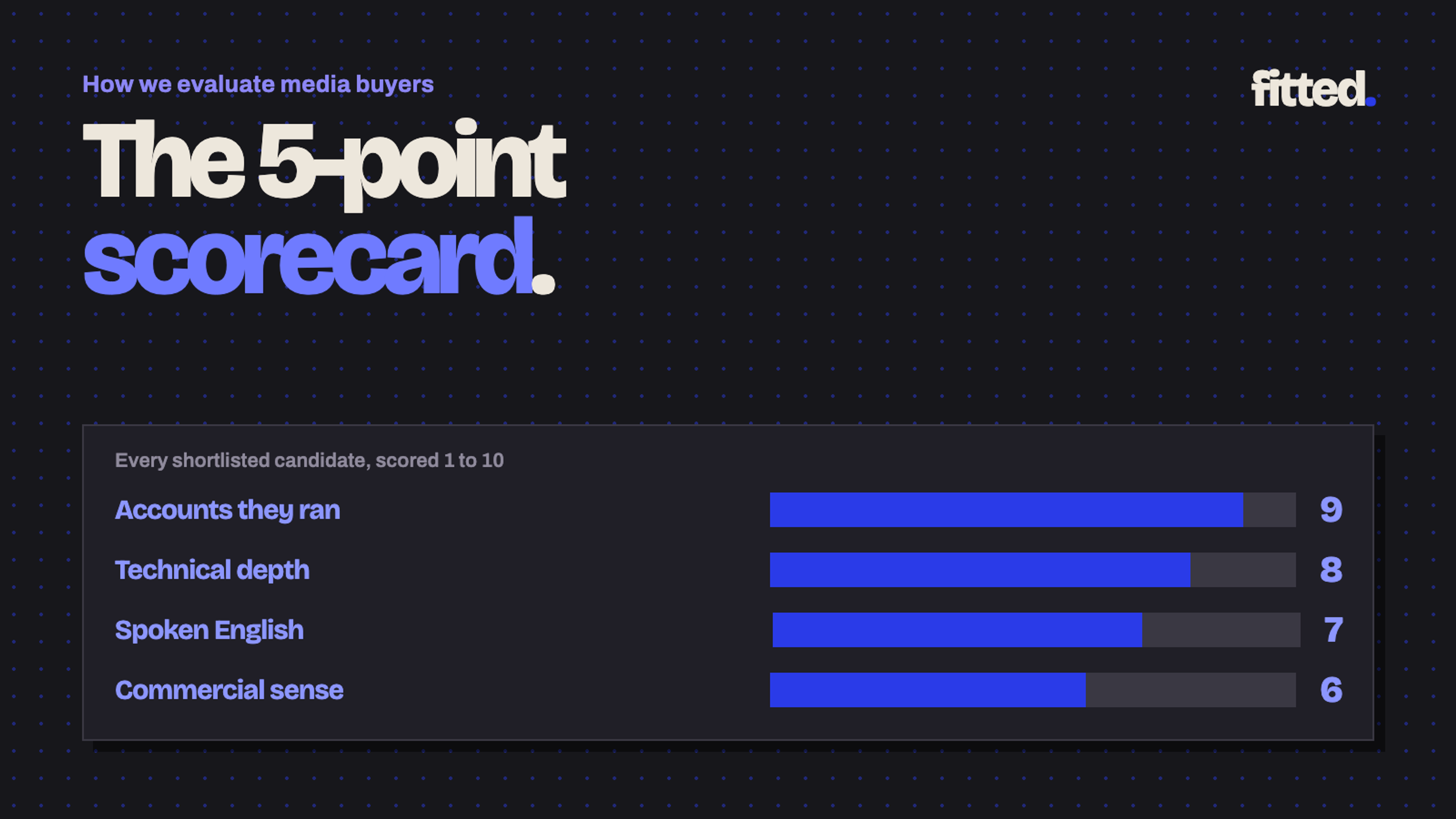
The 5-point paid media candidate scorecard we use to evaluate media buyers
Every candidate we shortlist is scored on the same five points. Here is the scorecard, what each score means and how to use it to compare candidates.
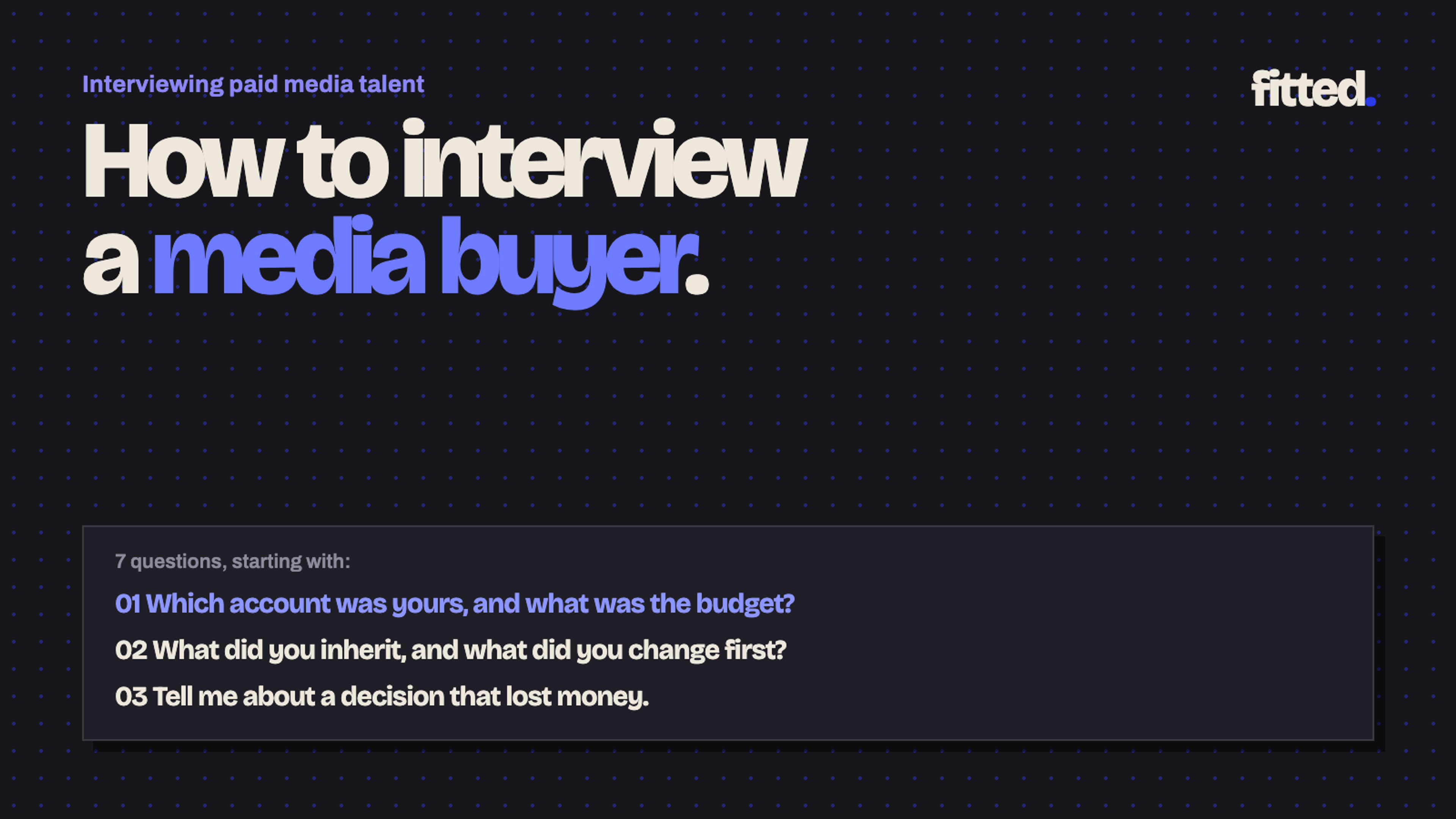
How to interview a media buyer when you are not one
Seven interview questions that show whether a media buyer actually ran the accounts on their résumé, with what a strong answer sounds like.