Flat fee vs percentage: the real recruiter fee for marketing hires
Recruiters charge 20 to 25% of salary, so the better the hire, the more you pay. Here is the math against a US$3,750 flat fee.
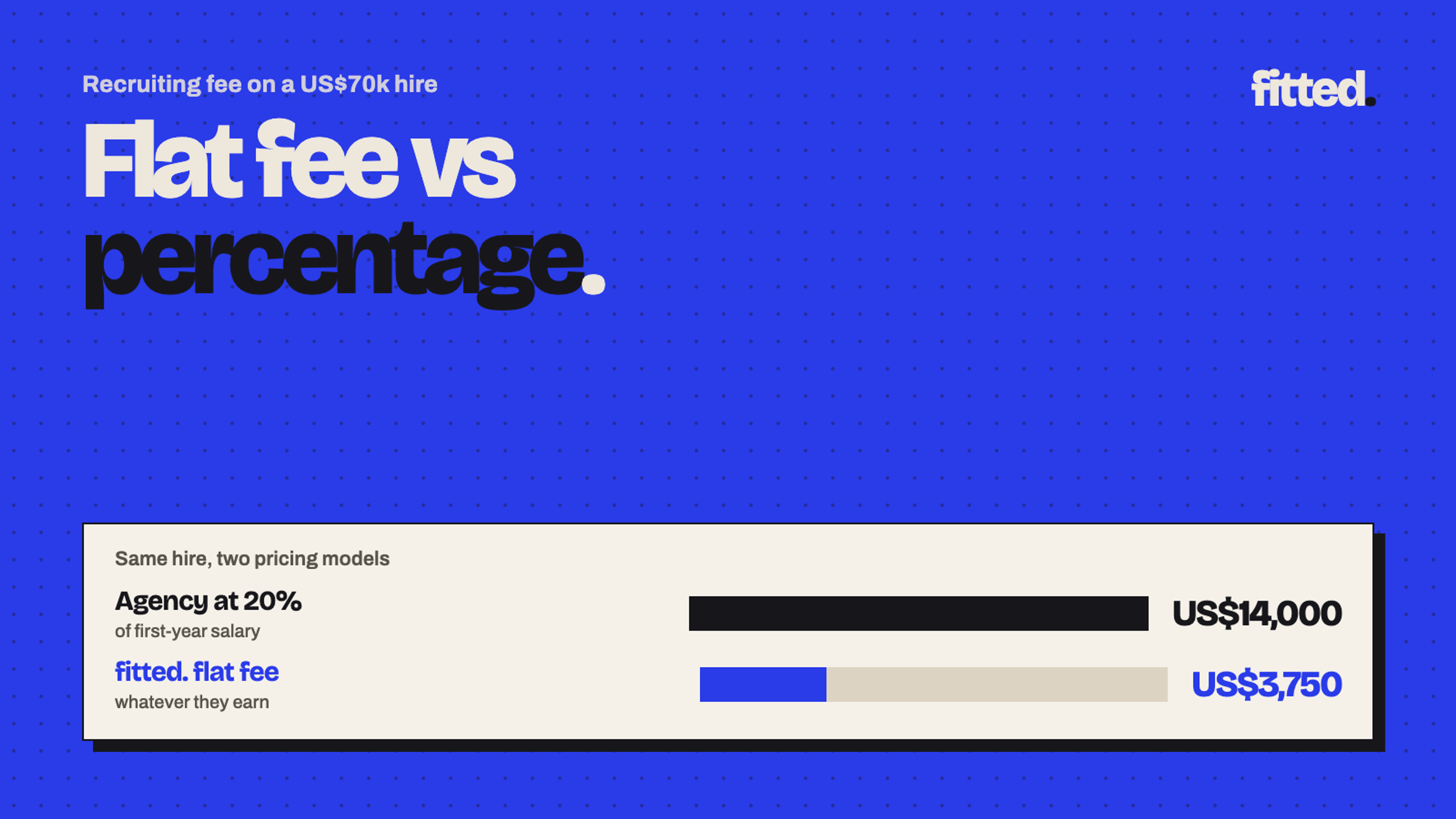
Recruiters charge 20 to 25% of salary, so the better the hire, the more you pay. The typical recruiter fee for marketing hires is a percentage of first-year salary, which means a US$70k hire costs US$14,000 to US$17,500 in fees. A flat fee does not move with the salary: at fitted. it is US$3,750 per hire, whatever they earn.
This article shows how percentage fees are calculated, what they add up to at three salary levels, and when each model makes sense.
How do recruitment agency fee percentages work?
Most agencies that place professionals charge a contingency fee: a percentage of the hire's first-year salary, paid when the person starts. If nobody is hired, nobody pays.
How high is that percentage? Top Echelon, a US recruiting network, says the average placement fee across its recruiters is about 22.5% of first-year compensation. We use 20 and 25% below to show both ends of the common range.
Retained search, used for executive roles, usually costs more and is paid in stages. This article focuses on contingency fees, the model most companies meet when hiring marketers.
How much is the recruiter fee for marketing hires at US$40k, US$55k and US$70k?
| Salary | Agency at 20% | Agency at 25% | fitted. flat fee |
|---|---|---|---|
| US$40,000 | US$8,000 | US$10,000 | US$3,750 |
| US$55,000 | US$11,000 | US$13,750 | US$3,750 |
| US$70,000 | US$14,000 | US$17,500 | US$3,750 |
And what the flat fee saves you at each level:
| Salary | Saved vs 20% | Saved vs 25% |
|---|---|---|
| US$40,000 | US$4,250 | US$6,250 |
| US$55,000 | US$7,250 | US$10,000 |
| US$70,000 | US$10,250 | US$13,750 |
These are straight percentage calculations on the salaries shown. Your actual agency quote may include a different percentage, a guarantee period or extra terms.
Why does a percentage fee grow with seniority?
Because it is tied to the salary, not to the work. Finding a US$70k media buyer is not twice as much work as finding a US$35k one, but the fee is twice as high.
That creates an awkward incentive. An agency on a percentage earns more when your hire costs more. A flat fee removes that tension: the recruiter earns the same whether you hire at the bottom or the top of your band.
It also makes budgeting simpler. You know the fee before the search starts, before you know who you will hire.
What does a flat fee recruiting model include?
It depends on the firm, so always check. A flat fee that only covers sending résumés is very different from one that includes interviews and written assessments.
Here is what fitted.'s flat fee covers:
- Sourcing across Latin America.
- Screening on channels, budget and hours.
- A technical and English interview with a performance marketer.
- A written scorecard for every shortlisted candidate, using our 5-point paid media candidate scorecard.
- Interview scheduling and offer support.
It is paid in two parts: US$750 to start the search and US$3,000 when your hire accepts. If the shortlist misses, we keep searching.
When is a percentage fee worth paying?
Percentage fees are not wrong. They can make sense when:
- The role is rare and the agency has a network nobody else has.
- You need volume, such as several hires at once, and the agency discounts.
- The guarantee is strong, for example a free replacement if the hire leaves early.
For a single senior paid media hire, those conditions are less common. The work is a focused search, and the fee should match the work, not the salary.
How do recruiter fees change the first-year cost of a hire?
The fee is part of what a hire really costs you in year one. Add it to the salary and the gap between markets grows.
We worked through that full first-year math, salary plus fee, in what a senior performance marketer costs in the US vs Latin America. With a US salary and a 20% fee, a senior hire passes US$114,000 in year one by our estimate. The same seniority in Latin America through fitted. comes to US$48,750.
What does a bad hire cost on top of the fee?
The fee is the visible cost. The bigger one is hiring the wrong person.
A media buyer who is not ready for the role does not just cost a salary. They spend your ad budget while they learn. A few weeks of poorly run campaigns can cost more than any recruiting fee, and then you pay to search again.
That is why the price of a search matters less than what the price includes. A cheap search that sends you ten unscreened résumés can end up costing more than a percentage fee. A flat fee that includes a technical interview and a written scorecard reduces the risk you actually care about.
Two questions help you compare:
- Who interviews the candidates, and can they judge paid media work?
- What do you receive about each candidate before you meet them?
If the answer to the first is a generalist recruiter and the answer to the second is a résumé, you are doing the hard part yourself.
What should you ask before signing with a recruiter?
Whatever model you choose, get these answers in writing:
- What exactly is the fee, as a percentage or a fixed amount?
- When is it due, at offer, at start date or in stages?
- What happens if the hire leaves early? Is there a replacement or refund period?
- What is included? Sourcing only, or interviews and written assessments too?
- Who interviews the candidates, and do they understand the role technically?
The last question matters most for paid media. A recruiter who cannot judge a media buyer will send you confident candidates, not strong ones.
FAQ
What is the typical recruiter fee for marketing hires?
Most contingency recruiters charge a percentage of first-year salary. Top Echelon reports an average of about 22.5% across its network, and 20 to 25% is a common range.
How much is a 20% recruiter fee on a US$55,000 salary?
US$11,000. At 25% it is US$13,750. A US$3,750 flat fee saves US$7,250 to US$10,000 on that hire.
What is flat fee recruiting?
A fixed price per hire that does not depend on the salary. You know the cost before the search starts.
What does fitted. charge?
US$3,750 per hire: US$750 to start the search and US$3,000 when your hire accepts. No percentage of salary.
Is a flat fee recruiter less thorough than a percentage one?
Not by default. What matters is what the fee includes: who interviews candidates, whether they can judge paid media work, and what you receive before meeting anyone. Compare the process, not the pricing model. A flat fee with a technical interview and a written scorecard can be more thorough than a percentage search that only sends résumés.
Josemar Mendes. Performance marketer who has worked for UK and US companies. Runs every technical and English interview at fitted. Published .
Related posts
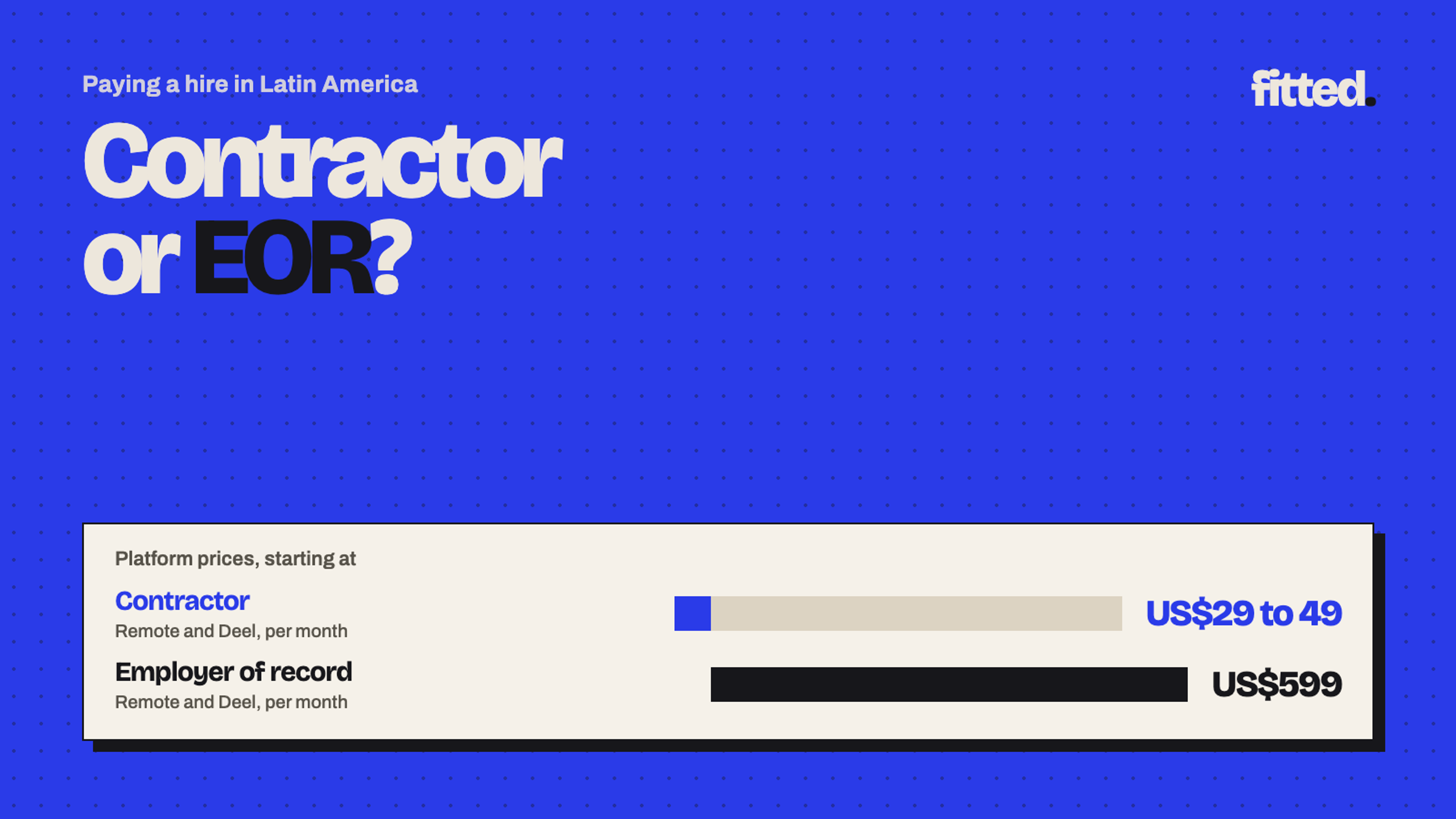
How US companies hire contractors in Latin America: contractor vs EOR
You found the right hire in Colombia. Here is how US companies pay them: as a contractor or through an employer of record, and what each costs.
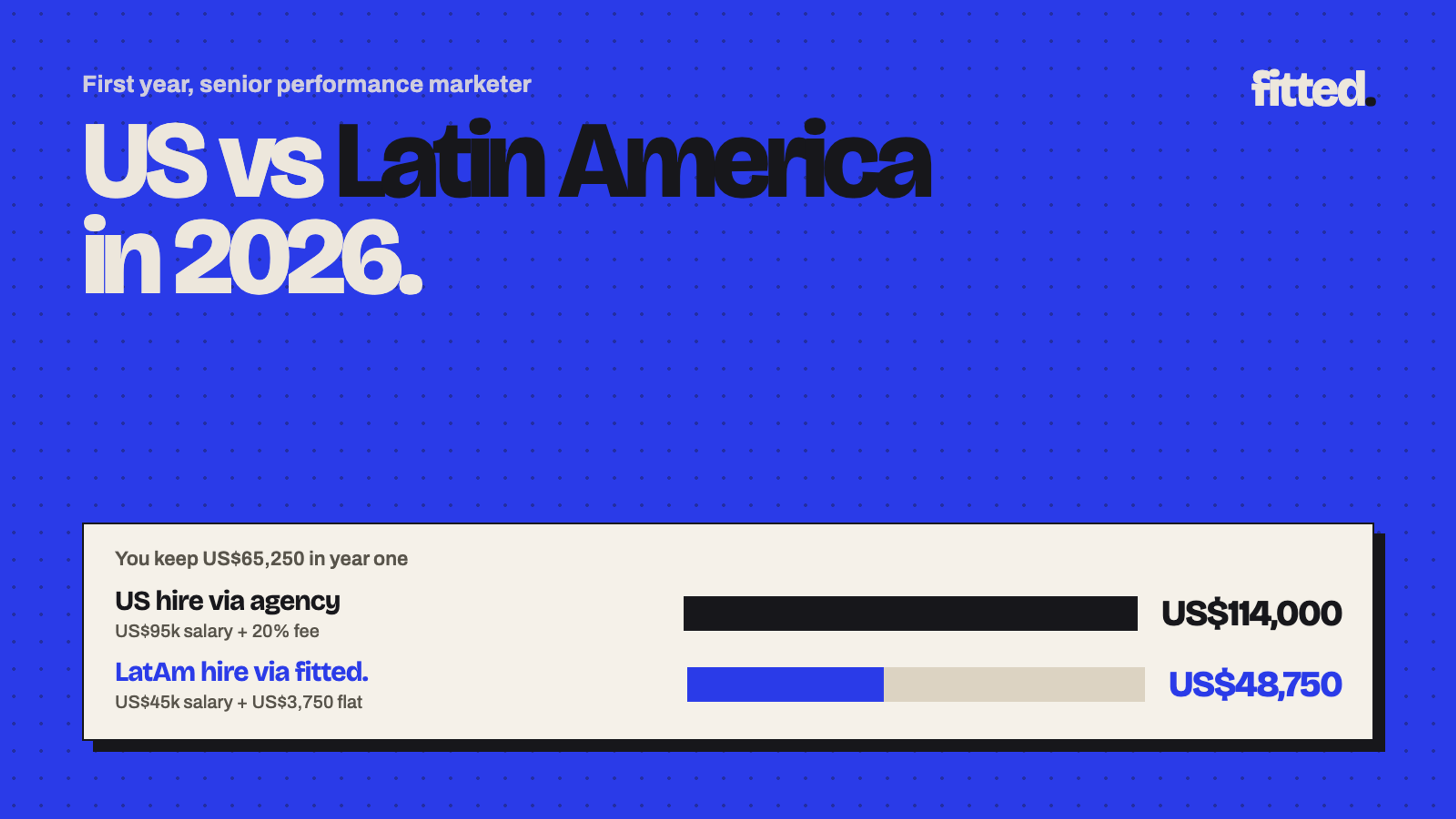
What is the cost to hire a performance marketer in the US vs Latin America in 2026?
A senior performance marketer costs US$85k to 110k a year in the US and about half in Latin America. Here is the first-year math, fees included.
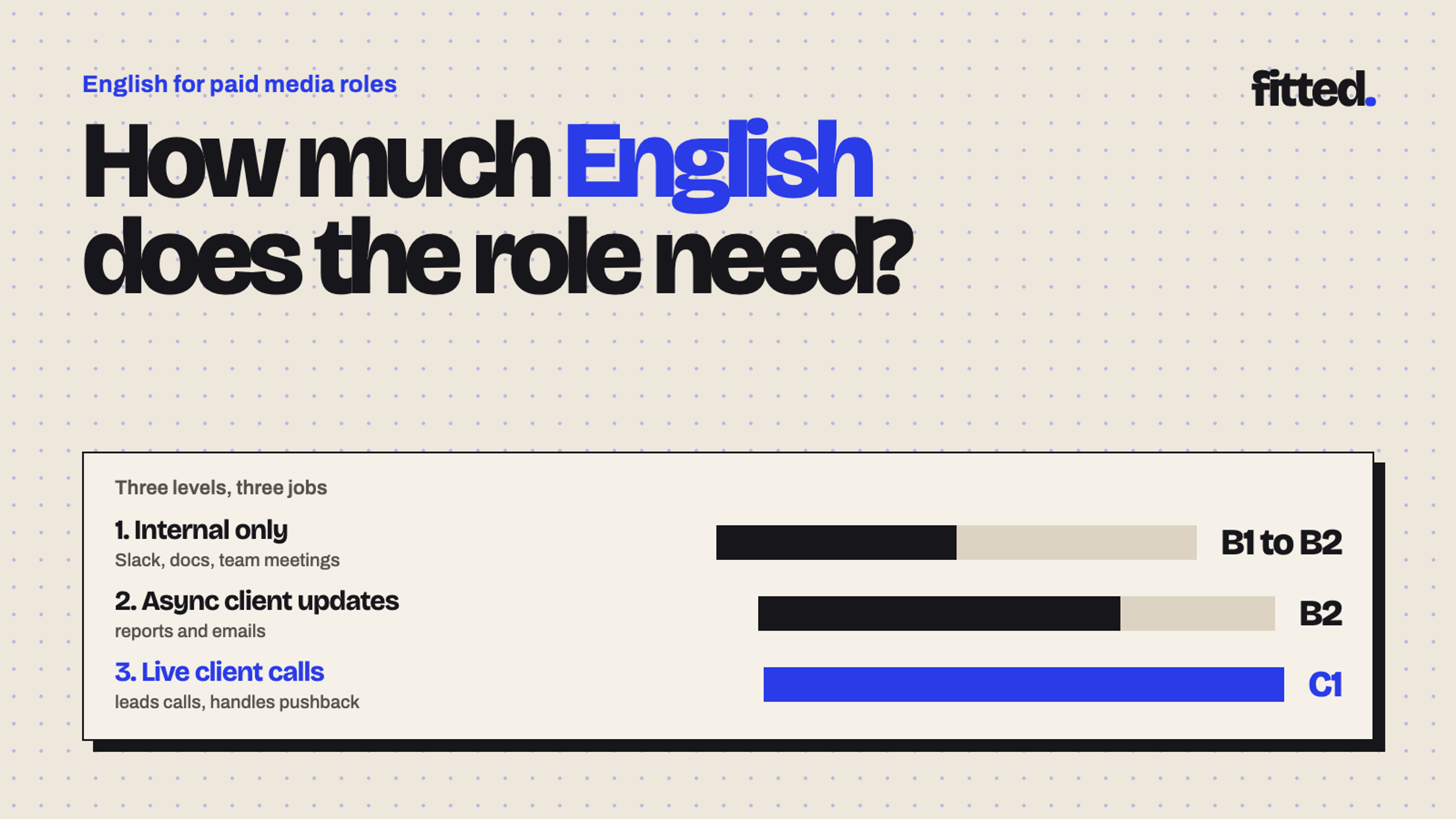
English level for remote marketing jobs: what a client-facing paid media role needs
Client calls and internal Slack need different levels of English. Most job posts don't say which. Here is how to define the level your role needs.